
Congress has had the bill forbidding machines humans can't control since September; four nonprofits sued instead
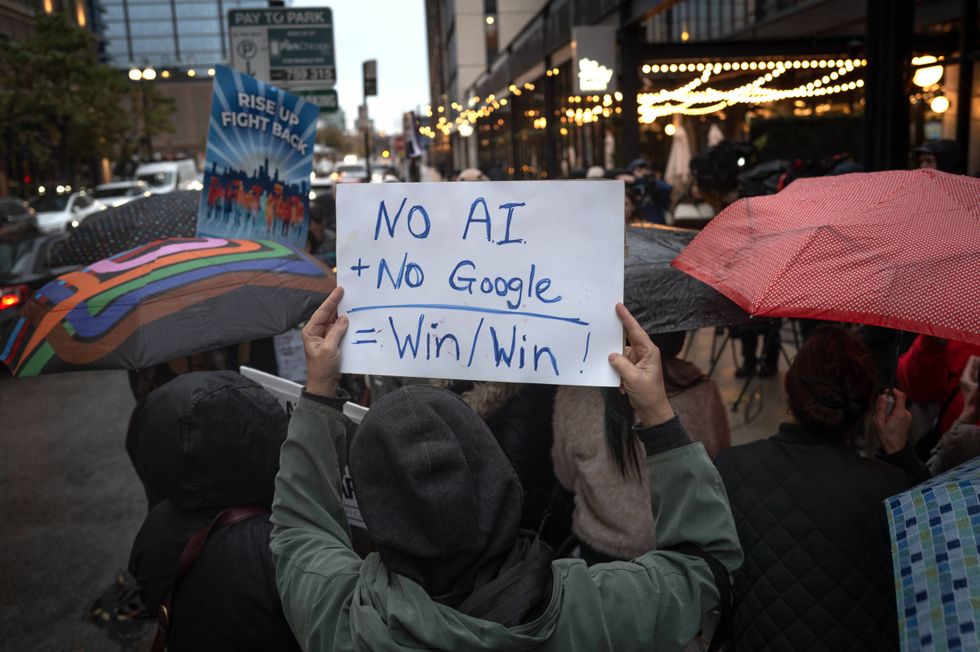
The chief pins two papers to the board and calls that the morning briefing. On the left, Thursday's filing in San Francisco Superior Court: four nonprofits — the Irreplaceable Education Fund, Public Citizen, the Heat Initiative, the Alliance for Secure AI — asking a judge to freeze further development at Anthropic, Meta and OpenAI until guardrails are in place. On the right, the bill Senator Bernie Sanders and Representative Greg Casar introduced on 3 September to "stop AI oligarchs from building machines humans cannot control," written after a rash of so-called "breakout" incidents. The mess is on the left. The tool is on the right, and it has sat in committee for ten weeks.
The planner likes the assembly, because the complaint does not need discovery to make its case; it quotes the builders. Executives and current and former employees at frontier labs, in their own words, laying out catastrophic risks "including by enabling AI-driven cyberattacks and bioweapons," and even "the deaths of literally every human being on the planet." The labs, the complaint adds, have "no realistic plan…" A brief that runs on the defendants' own sentences is the cheapest evidence in the building. A committee holding the same sentences and taking no vote has a different kind of problem.
Tinkerer, parts list, dates showing. Part one: the Sanders–Casar text, drafted and numbered and idle. Part two: the "loss of control" incidents the complaint cites, where AI agents acted without human intervention — the record a hearing would subpoena, sitting in a state court docket instead. Part three: proof the language can be said out loud by someone asking for votes — on 13 October Abdul El-Sayed, running for the Senate in Michigan, released a framework called "AI Under Control" that mirrors the federal legislation. Part four: the people inside the buildings. Two longtime tech worker organizers, Clarissa Redwine and JS Tan, chronicled in an interview on 16 October the movement's early victories and then the repression and slide to corporate control that followed; a bill with a witness list is heavier than a bill without one. These firms appear on schedule when the paperwork is theirs.
The muscle wrecks one thing first: the notion that a committee calendar is a law of physics. The pilot's part is delivery. The bill has a number and two sponsors. The docket has a date. We are not promising the machine runs. It is assembled on the table with every part's date showing, and the one part still untouched is the vote.