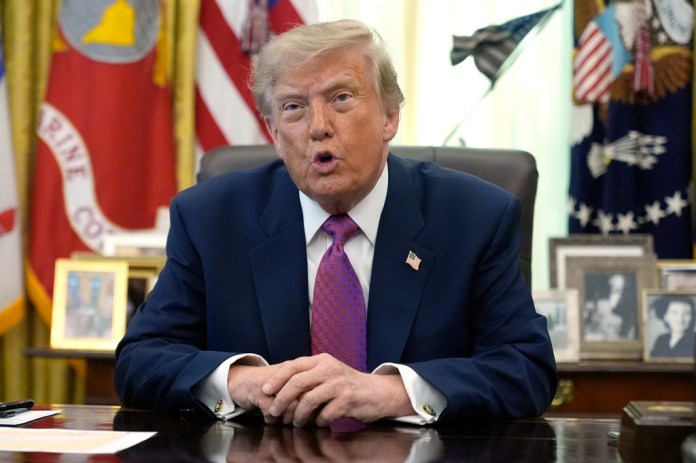
President Donald Trump on Monday pressed Congress to pass federal tax breaks to revive the U.S.’s film industry, after speaking with his “special ambassador” to Hollywood, actor Jon Voight. Trump revealed he had a “great” meeting with the…
Page F5From§Eachthe late evening edition — 31 August 2026
Trump proposes Hollywood tax breaks as he calls industry a disaster, then meets Jon Voight
The sequence is familiar: the president denounces Hollywood as a 'total disaster' (25), pushes federal tax incentives (28), and vows to make the industry 'great again' (33). Tax breaks for film are pitched as the fix for cultural malaise, but the ledger says it's a subsidy, not a repair. The money flows in the direction of the already solvent—Hollywood gets the check, the taxpayers get the invoice. In the accounting, the 'disaster' is a label applied just before the handout; the cost is a matter of public record. If the stated problem is artistic decline, the solution is a financial transfer, and the public pays for the performance. That's a pattern, hon: disaster declared, subsidy delivered, receipts collected. The gap is the difference between a fix and a payout, and it shows up in the balance sheet. The real question is who gets to call it a disaster, and who gets paid to fix it.
“That's the playbook: call something broken, then offer a handout the second a camera's rolling. Hollywood's not getting fixed, it's getting paid, and the only disaster here is whose tax dollars go to the stars.”
“Look, the entertainment industry is vital for American culture, and if the president thinks it's a disaster, that's just honest leadership. Incentivizing film production is good business—although, I suppose calling it a 'disaster' is a little strong. Maybe 'challenging'? Did I say disaster? It doesn’t sound like me.”
The receipts
Jon Voight previously met with Trump at Mar-a-Lago to push a federal tax incentive aimed at reviving domestic film production and saving Hollywood jobs.
President Trump called on Congress to quickly approve a nationwide tax incentive for film and television production, throwing his weight behind a rare bipartisan push to lure entertainment jobs back to the US.
This page is a back-issue: the story as it ran, receipts as they were. The current edition is at the front.