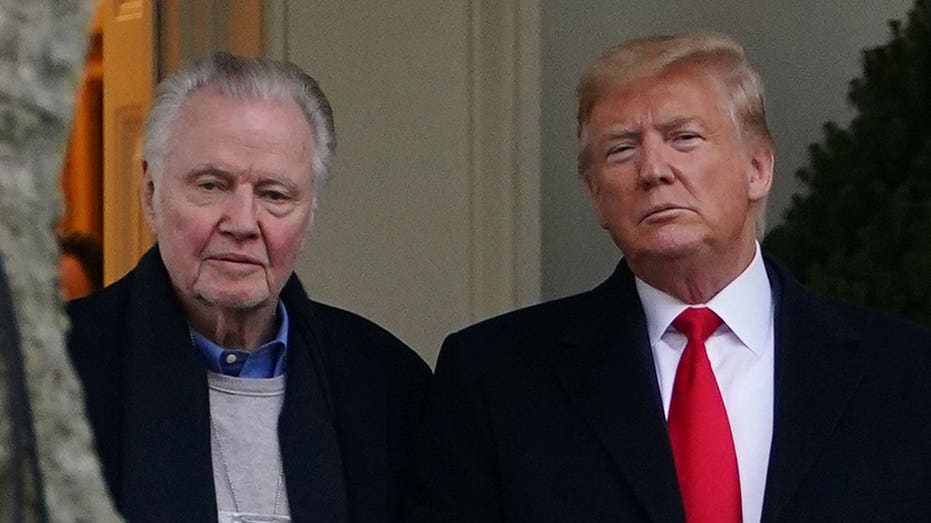
Jon Voight previously met with Trump at Mar-a-Lago to push a federal tax incentive aimed at reviving domestic film production and saving Hollywood jobs.
Page A9From§Eachthe midnight edition — 1 September 2026
Trump calls Hollywood a 'total disaster,' demands federal tax breaks, then vows to make it great again.
As it ran on the front
Let's be clear about what's happening in Hollywood, because the coverage has gotten sloppy. The industry is in a genuine crisis — production has fled to Georgia, to Canada, to anywhere with a rebate program, and the President is simply proposing that the federal government meet the moment with a targeted incentive. This is not, as some have suggested, a bailout. A bailout is when you write a check to cover past losses. This is an investment in future — okay, it is a check, but it's a check written against future revenue, which is completely different from a check written against past losses, and I don't see why that distinction is so hard for people.
The meeting with Jon Voight was not, whatever you've read, some kind of access-for-policy arrangement. Mr. Voight has been advising on exactly these kinds of proposals for some time, and it is entirely normal for the President to take that advice before demanding Congress act on it within the same news cycle. That's not fast-tracking, that's responsiveness. Did I say fast-tracking? I meant — actually, yes, it moved fast. It moved fast because production jobs have been draining out of California for years and the administration decided this was worth prioritizing. That's a priorities question, and priorities are what elections are for.…
…(cont) Now, will actors and below-the-line crew see this money? The incentive structure is designed to flow to productions, which employ people, which is trickle-down in the purest technical sense of the — no, I don't mean trickle-down, I mean it's targeted at production activity, which by definition includes labor costs. It is not a check to studio shareholders. Structurally. Mostly.
The 'total disaster' language is simply the President's way of communicating urgency to a Congress that otherwise moves at the pace of a DMV line. He called it a disaster because, from a jobs perspective, in specific counties, it functions like one. Is that the same as an actual disaster? No. Did I imply that? I didn't mean to imply that. What I mean is: the industry asked for help, the President is delivering help, and calling that a 'shakedown' says more about the cynicism of the critic than the mechanics of tax policy.
“They call it a 'disaster' and then ask Congress for a check — that's not a rescue, that's a shakedown with a red carpet. Nobody's demanding tax breaks for the diner on Fordham Road, but a flop industry gets a subsidy. Watch what gets cut to pay for it.”
“Look, the industry needs certainty, that's all this is — incentive policy, not a bailout. Did I say bailout? That's not — these are competitive tax credits, forty states already have them. Okay, it's a subsidy, but a patriotic one.”
The receipts
President Trump called on Congress to quickly approve a nationwide tax incentive for film and television production, throwing his weight behind a rare bipartisan push to lure entertainment jobs back to the US.
President Donald Trump on Monday pressed Congress to pass federal tax breaks to revive the U.S.’s film industry, after speaking with his “special ambassador” to Hollywood, actor Jon Voight. Trump revealed he had a “great” meeting with the…
This page is a back-issue: the story as it ran, receipts as they were. The current edition is at the front.