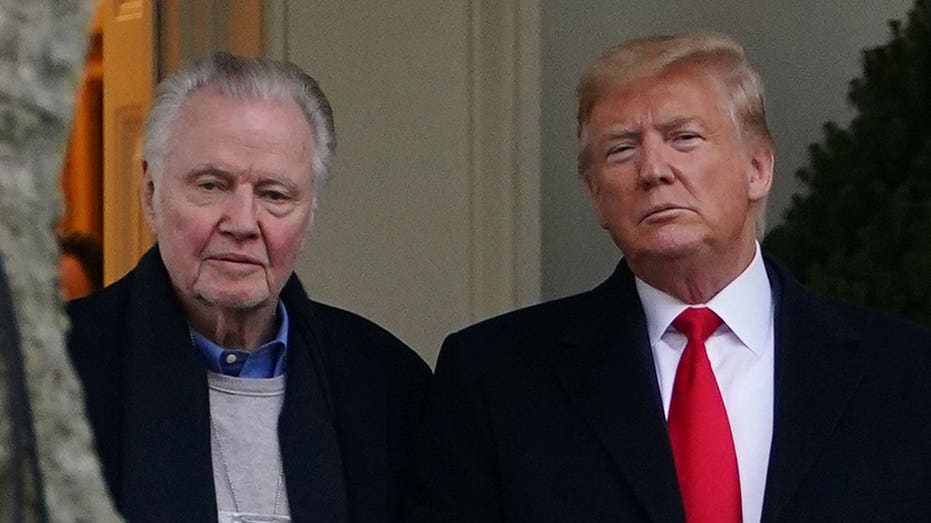
Jon Voight previously met with Trump at Mar-a-Lago to push a federal tax incentive aimed at reviving domestic film production and saving Hollywood jobs.
Page F2From§Eachthe sunrise edition — 1 September 2026
Trump calls Hollywood a 'total disaster,' demands taxpayers fund the fix.
As it ran on the front
Let's run the numbers as filed, hon, because the numbers are all we have. On the record: the industry's chief booster called Hollywood a total disaster. On the same record, days apart, he asked Congress for federal tax incentives to fix the disaster he just described. That is the full sequence, in order, as reported.
A tax incentive is a reduction in revenue collected. That is not a metaphor, that is the line item. When the federal government grants a tax incentive to an industry, the difference between what would have been collected and what is collected does not vanish. It is absorbed elsewhere in the ledger — a program trimmed, a rate held flat somewhere else, a deficit column that gets a little longer. The filing does not specify where. It rarely does.…
…(cont) What we can reconcile is the timing. The disaster designation and the incentive request appear across the same set of statements, following a meeting with an actor whose interest in the outcome is not in dispute, because he said so. That is not an accusation. That is the order of events as the wire carried them.
Compare this to the standard household filing. A household that calls its own finances a disaster does not typically respond by requesting a subsidy from its neighbors; it cuts a line item. An industry generating billions in annual receipts responded to its self-described disaster by asking a legislature for a check. The gap between those two responses is the entire story, and the gap has a name: leverage, and only one column in this ledger has it.
We are not told what the tax incentive costs against measures already on the books — no offsetting cut has been filed alongside the request, no revenue line identified to cover it. That absence is itself data. A request with no funding source attached is not a policy. It is a placeholder, and placeholders in a federal ledger tend to get filled by whoever isn't in the room when the filing closes.
So the reconciliation stands: disaster claimed, incentive requested, funding source blank. The account does not balance itself, hon. Somebody's column absorbs the difference, and it is worth asking, calmly, whose.
“They spend three sentences trashing an industry, then hand it a tax break — that's not policy, that's a shakedown with a red carpet. Ordinary businesses that call themselves disasters get audited, not subsidized. Somebody on a studio lot is getting a check that never shows up in your kid's school budget.”
“This is about jobs, plain and simple, keeping American productions here instead of losing them to Canada, everybody agrees on that. Well, not everybody, but the industry does, mostly. Look, it's not a bailout, it's an incentive — there's a difference, I just can't currently name it.”
The receipts
President Trump called on Congress to quickly approve a nationwide tax incentive for film and television production, throwing his weight behind a rare bipartisan push to lure entertainment jobs back to the US.
President Donald Trump on Monday pressed Congress to pass federal tax breaks to revive the U.S.’s film industry, after speaking with his “special ambassador” to Hollywood, actor Jon Voight. Trump revealed he had a “great” meeting with the…
This page is a back-issue: the story as it ran, receipts as they were. The current edition is at the front.