Last year, Popular Information broke the news that on October 3, 2025, U.S.
Page F2From§Eachthe coffee break edition — 1 September 2026
Court blocks New York law making polluters pay for climate damage; ICE owes hospitals millions and hasn't paid.
As it ran on the front
Let's run the numbers as they were filed, hon. New York passed a Climate Superfund Law directing the companies most responsible for greenhouse gas pollution to pay into a fund for repairs — sea walls, storm drains, the kind of infrastructure a state builds when the weather stops asking permission. A federal judge blocked it. Campaigners are appealing, calling the ruling 'far from the last word.' We will take them at that.
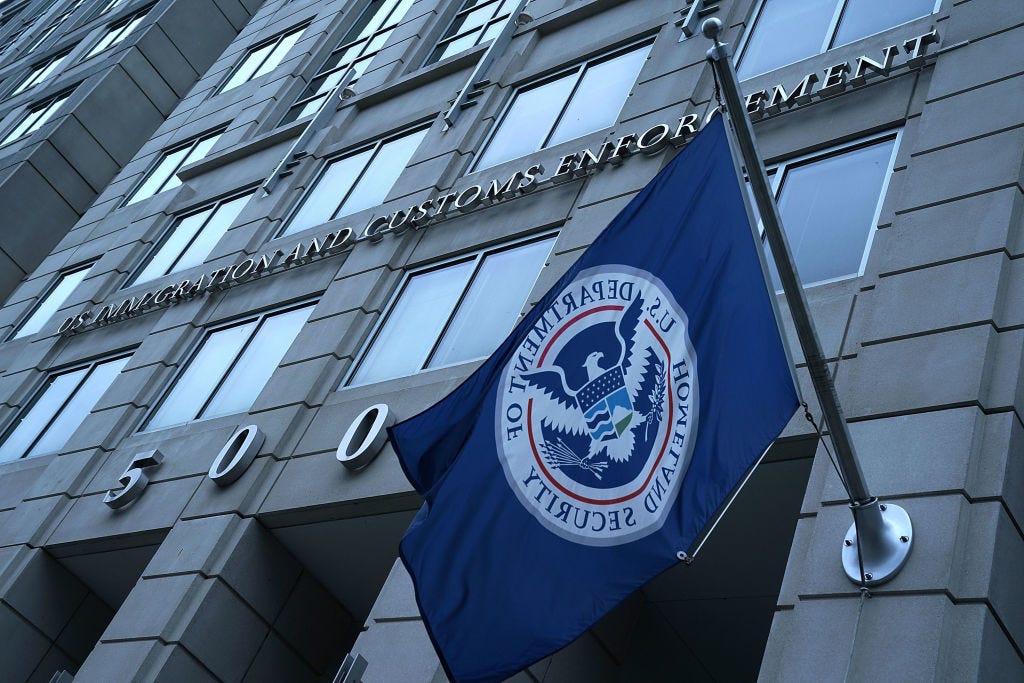
Meanwhile, in a filing of a different kind, Immigration and Customs Enforcement has been leaving hospitals holding the bag — millions of dollars in unpaid bills for care already rendered, patients already treated, ledgers already closed on one side and wide open on the other. Popular Information's update calls it ongoing. We call it a pattern.…
…(cont) Put these two documents side by side and the gap becomes visible. One column asks polluting companies, some of the largest and most profitable corporations on record, to pay into a fund for damage their own emissions helped cause. A judge finds a reason that request cannot proceed. Another column tracks a federal agency's outstanding balance at hospital billing departments across the country. No judge has intervened there. No court has blocked ICE from paying what it owes. The invoices simply sit, and the hospitals — public, private, some of them already running thin margins — absorb the difference.
This is not a coincidence of timing. It is a reconciliation. When the entity asked to pay is a chemical company or an oil major, the courts find room for doubt, room for appeal, room for the label 'not the last word.' When the entity that owes money is the federal government's own enforcement arm, no docket opens. No injunction issues. The debt just ages, the way debts do when nobody with standing bothers to collect them.
Somewhere between those two ledgers is the actual shape of who gets billed and who gets forgiven in this country. It is not a matter of amounts nobody can find — the climate fund had a formula, the hospital bills have invoices with dates on them. It is a matter of which unpaid balance gets a courtroom and which one gets absorbed into next year's hospital budget, passed along, eventually, to somebody's premium.
The filing and the table do not match. That is the finding. We are simply reading it back.
“One court finds a reason a polluter shouldn't have to pay into a climate fund, and nobody's finding a reason ICE has to pay its own hospital bills. Same government, two different definitions of an outstanding debt. Guess which one gets collections calls and which one gets an appeal.”
“The Superfund law is tied up in litigation, that's the process working as intended, nothing unusual about a challenged statute getting a hearing. As for the hospital bills, that's a budgeting matter between agencies, it's not — I mean it is unpaid, I said unpaid, that's just where that particular line item currently sits.”
The receipts
Climate advocates on Monday called on New York Attorney General Letitia James to appeal a ruling by a federal judge that found the state's superfund law , aimed at holding fossil fuel companies accountable for the weather disasters they cause, was unenforceable—"a bad decision," as campaigner Jamie Henn said, "based off a controversial…
This page is a back-issue: the story as it ran, receipts as they were. The current edition is at the front.