The world’s largest economy should not be governed by outdated assumptions about how fast it is capable of growing. Kevin Warsh used his Jackson Hole address to challenge the Federal Reserve to reconsider those limits and rethink its approach to monetary policy. Although much of the immediate attention focused on whether Warsh increased…
Page F2From§Eachthe noon edition — 1 September 2026
Bond sell-off threatens to squeeze borrowers worldwide; Kevin Warsh says the real problem is too many speed limits.
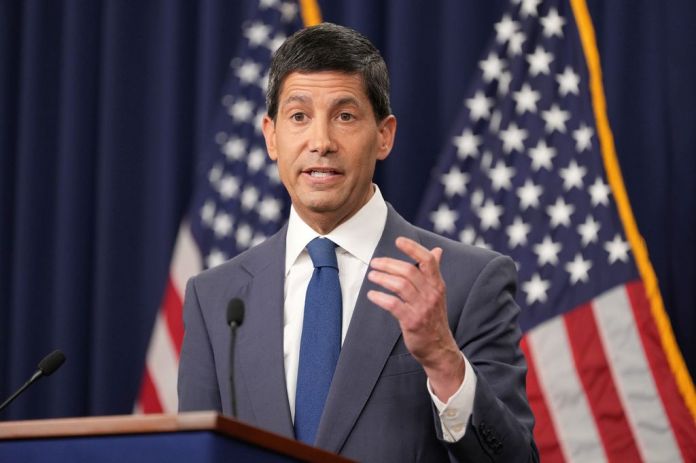
As it ran on the front
The New York Times filing says the bond sell-off threatens to squeeze borrowers around the world. That's the liability side. Rates go up, the payment on every adjustable mortgage, every corporate rollover, every emerging-market government bond goes up with it. That's arithmetic, not forecasting.
On the same ledger, the Washington Examiner filing says Kevin Warsh looked at that same environment and called the Fed's caution an 'artificial speed limit' on US growth. Not a caution, not a hedge against the thing happening in the paragraph above — a speed limit. Something imposed on you, arbitrarily, that a reasonable driver would ignore if the cop weren't watching.…
…(cont) I ran the two filings side by side. One says the road is already rough, borrowers are getting squeezed. The other says the signs on the road are the problem.
I don't have Mr. Warsh's model in front of me, so I can't reconcile his growth number against the sell-off number directly — the filings don't share a table. What I can tell you is who tends to benefit when the speed limit comes off during a sell-off: the ones who borrow short and lend long, the ones holding paper that gets refinanced cheaper if rates come down faster than the market wants. The borrowers being squeezed in paragraph one are, generally, not sitting on that side of the table.
So you've got a genuine two-sided document here: a market signal telling the world money is getting more expensive, and a policy argument, filed the same week, that the actual defect is caution. Both things are true on paper. They just don't add up to the same recommendation, and I don't think that's an accident of timing.
The gap, if you're keeping score, runs in one direction — toward whoever's already leveraged and away from whoever's already squeezed. That's not an opinion, hon, that's just where the two documents land when you set them on the same table.
“They keep telling you the problem with the economy is too many guardrails, right as the guardrails are the only thing keeping regular people's mortgage payments from going off a cliff. Take the speed limit off now and watch who's driving the fast lane — it ain't the guy squeezed by his own adjustable rate.”
“Warsh isn't reckless, he's pro-growth, there's a difference — the Fed's been too conservative for years, that's just economics, not... okay, maybe calling it an 'artificial' limit while a global bond sell-off is squeezing borrowers is a little on the nose, but the underlying point about growth stands, I think, probably.”
The receipts
Government yields are hitting multi-decade highs, reflecting anxiety about debt levels, deficits and inflation. The effects will extend to mortgages, business loans and other types of credit.
This page is a back-issue: the story as it ran, receipts as they were. The current edition is at the front.