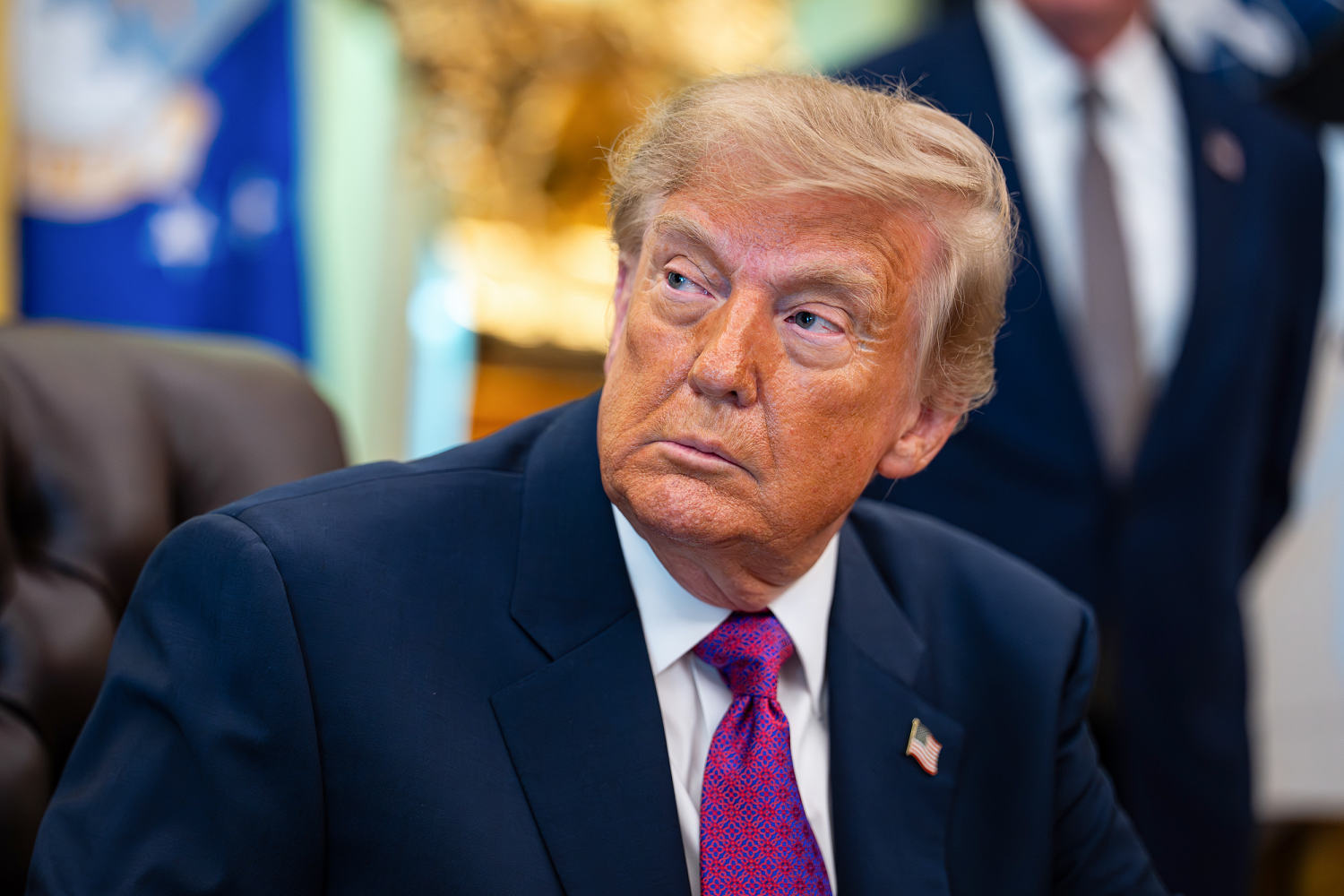
The U.S. has launched “large and powerful” strikes on Iranian targets near the Strait of Hormuz, President Donald Trump said Tuesday in a post on Truth Social.
Page A11From§Eachthe matinee edition — 1 September 2026
U.S. launches 'large and powerful' strikes on Iran; embassies then warn Americans of the escalation risk.
As it ran on the front
The president was clear: these strikes on Iranian IRGC targets were retaliation, plain and simple, for sea mines that endangered international shipping lanes. This was not an escalation — this was measured, proportional, entirely defensive... though I suppose 'large and powerful,' which is how the president himself described the operation, is not exactly the vocabulary of restraint. Did I say defensive? That's not quite — let me start over.
The strikes were necessary. CENTCOM confirmed the operation targeted IRGC infrastructure directly tied to the sea mine threat, and any administration worth its salt would have responded the same way. Sea mines in international waters are an act of aggression, full stop, and a president who let that slide would be inviting worse. The United States does not sit on its hands while adversaries seed the Strait with explosives. That's leadership.…
…(cont) Now, on the matter of the embassy notices — the ones telling American citizens across the Middle East to prepare for 'unforeseen escalation' — that is standard post-operation caution. Every strike carries some regional temperature change, and embassies issue advisories as a matter of course. It does not mean the administration expects the situation to spiral. It means we're being careful. Thorough. Responsible.
Although — and I want to be fair here — if the strikes were as contained and proportional as advertised, it's worth asking why the warning wasn't 'stay alert' but 'unforeseen escalation.' That phrase implies the government itself does not know what happens next. That's not the message we — that's not what I meant to say. Strike that.
Here is the honest version, since apparently that's where we've landed: the United States launched large strikes on Iranian targets, called it retaliation, and then told its own citizens abroad to brace for consequences nobody can predict. Both things are true. Whether that adds up to strength or to an administration that swung first and is now watching the scoreboard alongside everyone else — that's a fair question, and I don't think I'm the guy who gets to answer it today.
The mines were real. The strikes were real. The warning is real. Sorting out what 'retaliation' means when the retaliator immediately warns of blowback is somebody else's column. Mine was supposed to be shorter than this.
“They hit Iran, call it payback for some mines, then turn around and tell Americans in the region to watch their backs because things might get worse. That's the tell — you don't warn your own people about a fire you swear you put out. Somebody already knows how this goes, and it isn't the guy on TV calling it large and powerful.”
“Retaliation, plain and simple, sea mines don't strike themselves — this was measured. The 'unforeseen escalation' warning is just standard caution, it doesn't mean — okay, it kind of means they don't know what happens next either.”
The receipts
U.S. Central Command did not say precisely what it was trying to destroy in Iran, but it said the attacks were aimed at Iran’s Islamic Revolutionary Guards Corps.
Multiple U.S. embassies warned Americans in the Middle East to "exercise caution and heightened vigilance," while CENTCOM launched fresh strikes on Iran.
Two oil tankers were attacked in the Strait of Hormuz as the U.S. and Iran returned to hostilities in a six-month war that appears to be locked in a stalemate.
The Strait of Hormuz remains the primary flashpoint in the conflict.
This page is a back-issue: the story as it ran, receipts as they were. The current edition is at the front.