On the sidelines of the G-20 meeting of finance ministers, Treasury Secretary Scott Bessent pushed allies to support the United States’ efforts to constrain Iran’s economy.
Page A10From§Eachthe midnight edition — 2 September 2026
Treasury vows to 'asphyxiate' Iran's economy as oil hits record flow through Hormuz.
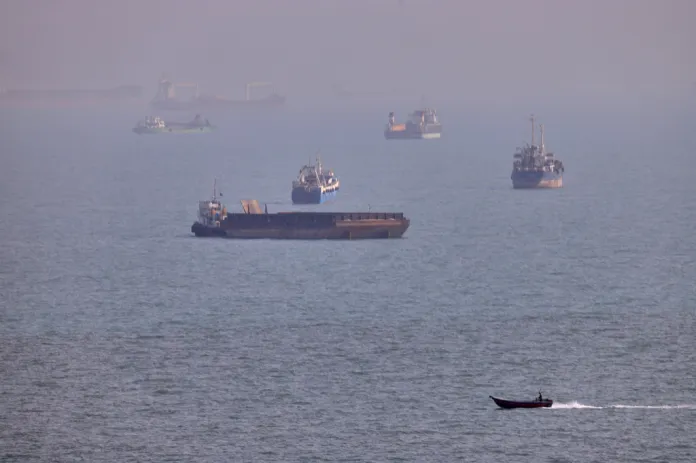
As it ran on the front
Hang on, I had this here somewhere — asphyxiate. That's the word. Not mine, I wrote it down because it isn't the kind of word you expect out of a sitting Treasury Secretary, and I circled it, right there, because when a man testifies that the plan is to asphyxiate another country's economy, you tend to remember the word. Bessent said it, the Washington Post ran it, and he said our allies support it. Support the plan to asphyxiate. That's a strong word for a briefing. I keep coming back to it.
Now, I don't know much about economics. I know a little about my car, though — it's been running rough since the fan belt started slipping, and here's the thing about a belt: you can hear the engine racing and the belt just screaming against the pulley, not enough grip to do its job anymore. My mechanic, over at the garage on the corner, he says a rough idle usually means something's still getting fed even while the rest of the engine's choking. Still burning fuel. Still running, just wrong. I think about that a lot lately, sitting out there waiting on a part that hasn't come in.…
…(cont) Because here's the other thing I wrote down, same week, different paper — Chris Wright, that's the Energy Secretary, said more oil is moving through the Strait of Hormuz right now than at any point since this war started. Most oil since the war began. That's his number, not mine. I circled that one too, same page, right under the first.
Now, the Strait of Hormuz, from what I understand — and I'm no admiral — that's how a lot of that region's oil gets out to the rest of the world. That's the pipe, more or less. So we've got one official saying the goal is to choke off an economy, and another official, same administration, same week, saying the pipe has never been fuller.
I took the notebook down to the corner store, asked the fella behind the register if I was reading it wrong. He pulled both stories up on his phone right there and read them back to me, word for word. Asphyxiate in one. Record flow in the other. Same strait, same war, same week.
I don't know what that adds up to. I really don't. Maybe the sanctions aren't touching the oil business at all, which would be worth knowing, because that's usually where the money sits in a place like that. Maybe it means something else entirely. I wrote a question mark next to it, because I don't have the receipt to close that part out yet.
But before you go — one more thing. Bessent says the policy is to asphyxiate their economy, and he says our allies are on board with it. Wright says more of their oil is moving through that strait than at any point since the war began. Same administration, same week, two different secretaries, two different numbers written on the same page of my notebook. Which one's the policy?
“They call it asphyxiation and then brag the oil's never moved faster. Read that twice: the money keeps flowing, it's just not stopping for the people at the bottom. That's the tell — this was never about starving a government, it's about deciding who gets to profit from the choke.”
“The Hormuz numbers are about global energy security, not Iran's economy specifically — completely separate metrics, completely unrelated, I mean, they're the same waterway but — look, asphyxiation is a process, it takes time, ask any doctor.”
The receipts
Roughly 17 million barrels of oil and gas products passed through the Strait of Hormuz on Monday, the most since the war in Iran began. Energy Secretary Chris Wright confirmed the total with reporters while traveling to Venezuela Tuesday evening, saying all 17 million barrels passed through via boat. When accounting for additional…
This page is a back-issue: the story as it ran, receipts as they were. The current edition is at the front.