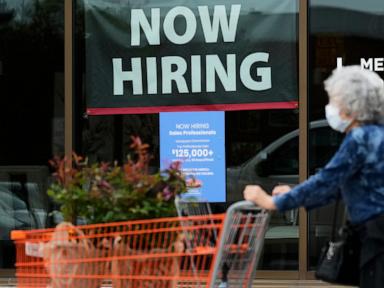
More Americans filed for unemployment benefits last week, but layoffs are still rare and jobless claims remain at historically low levels
Page F2From§Eachthe coffee break edition — 3 September 2026
NYT called it a "no-win situation" for the Fed. Five days later, Waller proved it right.
As it ran on the front
Seven days ago, 203,000 Americans filed for unemployment benefits, and ABC News filed it the way ABC News files these things now: "remaining at historic lows." One day later, Kevin Warsh, the Federal Reserve chair, stood at a podium and set the terms under which that number would matter. Inflation, he said, must be "moving to our objective, clearly and at sufficient speed. Otherwise, we have work to do." The following day, the New York Times counted his cards for him and printed the phrase this desk keeps on file for exactly this purpose: Warsh was in a "no-win situation," raise rates and draw the president's ire, hold and watch inflation run.
Today, Christopher Waller, a Federal Reserve governor, delivered his own remarks on rates, six days after Warsh's speech and five days after the Times' verdict. He sounded, the wire said, optimistic about inflation's trajectory. He also indicated he would support higher rates if the progress does not continue. The optimism and the caveat arrived in the same sentence, which is one way to describe a decision that has already been made standing next to a mood that has not caught up with it.…
…(cont) The same morning, the claims number moved. Six days after Warsh's speech, seven days after the 203,000 print, the count came in at 206,000 — up three thousand — and ABC News filed this one, too, as sitting at "historically low levels." Both sentences are accurate. Both numbers are real. The distance between them is three thousand people who did not have a job last week and did the week before, filed under a phrase that does not change no matter which side of it they land on.
Two Fed officials described, inside six days, the conditions under which they would raise rates. Zero described the conditions under which they would lower them. Waller filled the slot Warsh's speech had already reserved, five days after a newspaper described the trap by name. The claims count went up. The inflation number is still due. The rate decision the Times sized up on August 29th sat exactly where it was left, waiting for whichever governor walked up to it next, and the wait was five days, and it was Waller.
“They keep telling you it's "data-dependent," but Warsh said the line six days before Waller repeated it almost word for word — the data didn't decide anything, the sentence was already written. Three thousand more people lost a job this week, and the answer on the table is still higher rates, not lower ones, not for them. That's not analysis, that's a script read twice by two different guys.”
“Waller didn't say he'd raise rates — he said he'd support higher rates if inflation doesn't cooperate, which is called having a plan. That's not a "no-win situation," that's data-dependence, the same data-dependence Warsh described six days earlier. Different governor, same line — okay, that one's not landing the way I wanted it to.”
The receipts
The number of people filing for U.S. unemployment benefits fell last week, remaining at historic lows as layoffs are rare and most Americans enjoy job security
Federal Reserve Chair Kevin Warsh signaled on Friday the Federal Reserve is not ruling out an interest rate hike as inflation remains too high. "We must be confident that underlying inflation is moving to our objective, clearly and at…
Christopher J. Waller, a Federal Reserve governor, sounded optimistic about inflation’s trajectory but indicated he would support higher rates if progress does not continue.
Kevin M. Warsh, the chairman of the Federal Reserve, must soon decide whether to raise interest rates if inflation does not ease, even if it draws President Trump’s ire.
This page is a back-issue: the story as it ran, receipts as they were. The current edition is at the front.