The authors stated that 92 per cent of anti-Zionist Jewish respondents found campuses safe and inclusive.
Page A2From§Eachthe matinee edition — 6 September 2026
Report built to justify antisemitism probes buried finding that 92 percent of Jewish students call campus safe
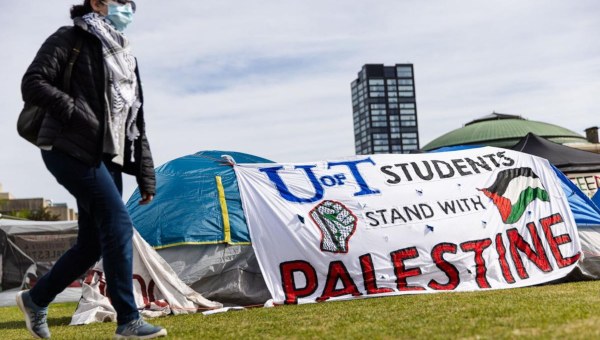
As it ran on the front
Start with the number, because they tried not to let you start there. Ninety-two percent. That's how many anti-Zionist Jewish students, surveyed by the authors of their own report, said their campus was safe and inclusive. The authors had that number in hand and built the report around everything else instead. That's not a typo. That's an editorial choice, made by people who knew what the number meant and decided the story worked better without it.
Two weeks before the Bullet caught it, on August 21st, a career attorney out of the Justice Department's Civil Rights Division filed a whistleblower complaint. Haley Van Erem had watched the antisemitism task force push Harvard, Brown, and Columbia into settlements while turning up, in her account, little to no evidence of anti-Jewish discrimination to justify them. She called it in her filing "an unlawful process designed to achieve predetermined political" ends — the sentence cuts off in the record, but you don't need the missing word to get the shape of it.…
…(cont) A week after that, on August 28th, the ADL put out its own number: 73.6 percent of Jewish union members surveyed said they self-censor in union spaces. Read that one next to the 92 percent and you start to see how this works. When the number cuts the right way, it's the headline. When it cuts the other way, it's a paragraph nobody quotes, sitting in a report whose whole purpose was to hand somebody a reason.
None of these three things happened in isolation. A whistleblower says the investigations were built to reach a conclusion. A report gets written to supply that conclusion with cover. And the one number in that report that would have complicated the cover — the 92 percent who said they felt safe — gets buried in it instead of leading it. That's not three stories. That's a paper trail.
Money and settlements moved on the strength of a story that the report's own data didn't support. Universities didn't get to argue that point, because the number that would have let them was sitting where nobody reads. The people who paid for this — in settlement dollars, in resources, in whatever else those investigations cost the schools and the students who actually work in them — never got a vote on whether the premise was true. They just got the bill.
“They needed a scary number, so they wrote a report, and when the number came back the opposite of scary, they just didn't lead with it — that's not research, that's laundering. A DOJ attorney is on record saying the whole task force was built to land on a conclusion it already had, and Harvard, Brown, and Columbia paid real settlement money into that machine. Somebody's kid's tuition is funding the cover story for why the investigation happened in the first place.”
“The task force secured real settlements from Harvard, Brown, Columbia — that's accountability, that's the record. The whistleblower complaint is one attorney's opinion, still unresolved, and as for the 92 percent — well, that's one number in one report, context matters, I'd want to see the full — did I say I'd want to see the full report? We already have the full report. Never mind.”
The receipts
· Jewish educators face rampant antisemitism in teachers unions, new report finds from the morgue, 28 Aug 2026
· DOJ Whistleblower Confirms "Antisemitism" Probes Against Universities Were Sham Investigations from the morgue, 21 Aug 2026
This page is a back-issue: the story as it ran, receipts as they were. The current edition is at the front.