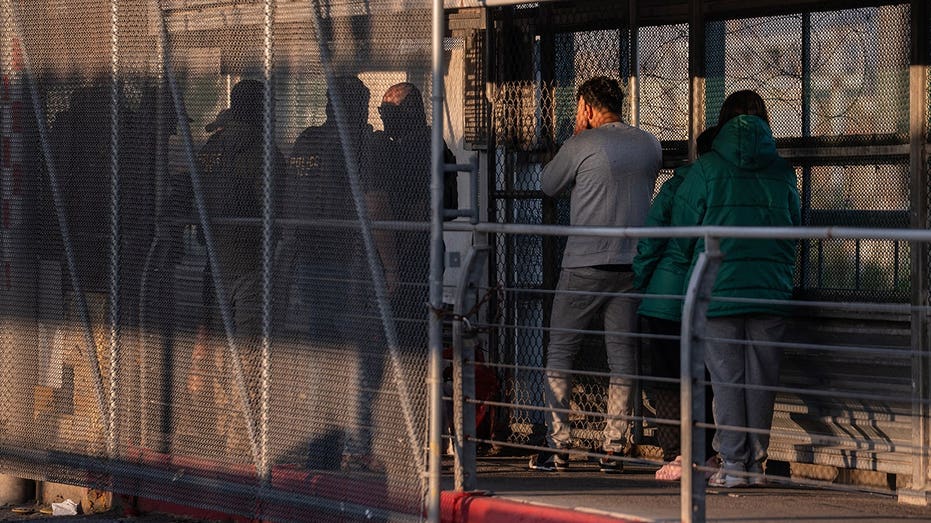
“Federal appeals court compares Trump migrant detention policy to Japanese American internment”, 10 September 2026 (Photo via Fox News — the original report)
As it ran on the front
On September 8th, the D.C. Circuit upheld a ruling that blocks the IRS from handing the last known addresses of millions of people over to ICE. Two days later, the 4th Circuit reached for a heavier comparison: it rejected the administration's mass migrant detention policy by likening it to the internment of Japanese Americans during World War II — a chapter of American history the federal government spent decades formally apologizing for.
Two courts, two weeks, the same warning issued twice in different language.…
…(cont) The pattern isn't confined to immigration. On September 1st, the Justice Department filed a petition asking the Supreme Court to review the ban on transgender troops serving in the military — the same policy the Court already allowed to stand once, last year, on an interim basis while the underlying case worked its way up. An interim win didn't settle the question; it bought time. Now the administration wants the full Court to make the ban permanent.
Follow the shape across all three. A policy gets challenged. A court says no. The administration doesn't revise the policy — it goes looking for a bigger courtroom. ICE wanted the addresses for enforcement; the D.C. Circuit said the law doesn't allow that kind of data-sharing and upheld the block. The detention program drew a comparison to one of the ugliest legal episodes in American history, and the 4th Circuit's ruling sets up exactly the kind of Supreme Court fight the trans-troop case is already having.
None of this requires reading between the lines. This is one administration, filing in three different courthouses, making the same bet each time — that the next court up the ladder will be friendlier than the last one said no. Sometimes the bet pays off: ask anyone tracking the trans-troop case, where an interim win from a year ago is still functioning as policy while the appeal grinds on. Sometimes it doesn't: ask the IRS, sitting on address data two courts have now told it not to hand over, or the detention program, sitting in a published opinion next to a program the country apologized for.
The receipts aren't complicated. A tax agency tried to become an immigration enforcement tool and a federal appeals court said no. A detention policy got compared, in writing, to internment. A ban on transgender troops is headed back to the Supreme Court because a one-year-old interim win wasn't enough for someone. Three courtrooms, one administration, one theory of the case: an answer only counts once it's the answer they wanted. Until then, there's always another court to ask.
🍺
“They wanted the IRS to hand over the home addresses of millions of people so ICE could go knock on doors, and a federal appeals court told them no. Two days later, a different appeals court looked at the detention program itself and the closest honest comparison it could find was internment camps. When two courts in one week land on the same warning, the third filing isn't a coincidence — it's a pattern with a docket number, and it's still running while they wait for a friendlier bench.”
“Comparing a detention policy to internment is the kind of overheated language you'd expect from activist judges, not a — okay, it's the 4th Circuit, that's not exactly a hotbed of activists. And the IRS matter, that's not surveillance, that's routine interagency information-sharing in support of lawful enforcement, which is presumably why two separate federal appeals courts felt the need to block it. I don't — that's not the point I was trying to make.”
The 4th Circuit rejected Trump's mass detention policy, comparing it to Japanese Americans' World War II internment, setting the stage for a Supreme Court showdown.