A recently published economic analysis estimates that President Donald Trump’s illegal war with Iran has cost US consumers an average of $1,760 per household—including a total of $121 billion in extra spending on energy alone—since the conflict began less than 8 months ago. The war, which Trump launched without congressional…
Page A4From§Eachthe late evening edition — 25 September 2026
The tariff vow that won Trump the White House now costs his party the House.
As it ran on the front
That promise won him the White House. On September 26, the New York Post — not exactly a redoubt of the deep state — noted it may now cost him the Congress that comes with it. A day earlier, Cook Political Report had shifted fifteen House races toward Democrats and said it was "almost impossible" for Republicans to hold their majority. The Daily Caller ran the same news that morning under the header "grim update," which is one way to describe watching your own side's scoreboard.
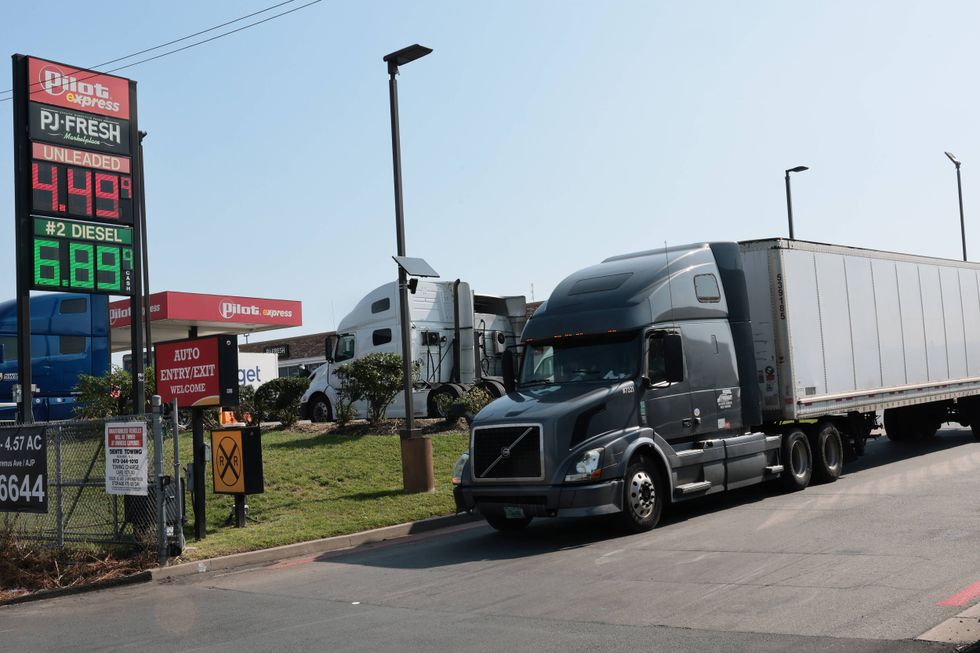
The confidence numbers landed the same Friday. Consumer sentiment slipped to a four-month low, and the reason given was the reason given for months now: rising inflation, mounting cost-of-living concerns, the ordinary arithmetic of a grocery bill. That inflation didn't arrive on its own. By September 17, Moody's had already run the math the ledger never publishes for free: $121 billion in extra household energy spending, roughly $1,760 a household, in the eight months since that war began. Diesel climbed as Iran shut down shipping through the Strait of Hormuz; on September 16, Britain's own inflation data logged diesel up 14.2 pence a liter in a single month, filed under the same conflict.…
…(cont) In Kansas, that arithmetic has a face. Incumbent Republican Roger Marshall — dragging a medical-debt-collection controversy behind him — is running neck-and-neck with a Democratic challenger, which The Hill on September 21 filed under "broader national discontent with the Trump administration's economic policies." Discontent is the word the paper used; the poll is the receipt voters actually filed.
By September 25, that discontent reached the floor. Republicans in competitive races started calling outright for an end to the Iran war, with under forty days left before Election Day — not because the war had ended, but because the diesel it produces hadn't gotten any cheaper. The same party that promised tariffs would lower your bills is now campaigning against the war that raised them. The bill, like always, went out to the district.
“Follow the money and it walks in a circle: they sell you a tariff to lower prices, the tariff helps trigger a war nobody voted on, the war jacks up diesel, and now the same candidates who ran on "cheaper" are begging to end the war they started. That's not two stories, that's one grift with two receipts — $121 billion out of your pocket into somebody's, and a poll number is the only place it shows up as a cost to them. When the guy who sold you the tariff is the guy now running from the war it fed, you're not watching an economy correct itself, you're watching a con collapse in real time.”
“Look, a four-month low in consumer confidence is well within normal fluctuation, the fundamentals remain historically strong, and one forecaster's model — okay, two forecasters' models — moving fifteen seats is just — that's just one data point. Several data points. The Iran conflict is a temporary supply disruption, diesel prices are transitory, and any Republican calling to end the war is simply reflecting constituent — no, showing leadership, that's the word, leadership on a complex geopolitical situation that has nothing to do with the tariffs, which are working, and don't ask me why the candidates are running from it if it's working.”
The receipts
The Cook Political Report shifted 15 House seat ratings toward Democrats on Friday and said it was almost impossible for Republicans to retain control of the House of Representatives. VoteHub head of data science Zach Donnini joins to discuss.
It turns out that Liberation Day was the beginning of the end for any appreciable political support for Trump's tariff policy.
A Democratic challenger is running neck-and-neck with Republican incumbent Roger Marshall in the Kansas U.S. Senate race, reflecting broader national discontent with the Trump administration's economic policies and local controversies surrounding Marshall's medical debt collection practices.
Democrats are running an average of 11.5 points ahead of their 2024 baseline across 2026 special elections MultiState Elections, 2026 special-election tracking
Major Midterm Forecaster Delivers Grim Update For RepublicansMajor Midterm Forecaster Delivers Grim Update For Republicans
NAR puts the median first-time homebuyer at 40 years old - a record - and first-time buyers at a record-low 21% of the market National Association of Realtors, 2025 Profile
Consumer confidence hits 4-month lowWelcome to The Hill's Business & Economy newsletter {beacon} Business & Economy Business & Economy The Big Story Consumer confidence slips U.S. consumer sentiment dipped to a four-month low in September amid rising inflation rates and mounting cost-of-living concerns, according to survey results released Friday. © Nam Y.
Democrats are running an average of 11.5 points ahead of their 2024 baseline across 2026 special elections MultiState Elections, 2026 special-election tracking
More Republicans running in close races calling for end to Iran warSeveral Republicans running in competitive races are joining growing calls in their party to end the Iran war with less than 40 days until the midterms.
· Stubborn inflation raises prospect of Fed rate hike from the morgue, 11 Sep 2026
· Inflation hits five-month high amid soaring cost of war from the morgue, 16 Sep 2026
This page is a back-issue: the story as it ran, receipts as they were. The current edition is at the front. The byline is a pen name for a column drafted by a machine and checked by the editor: how this is made.