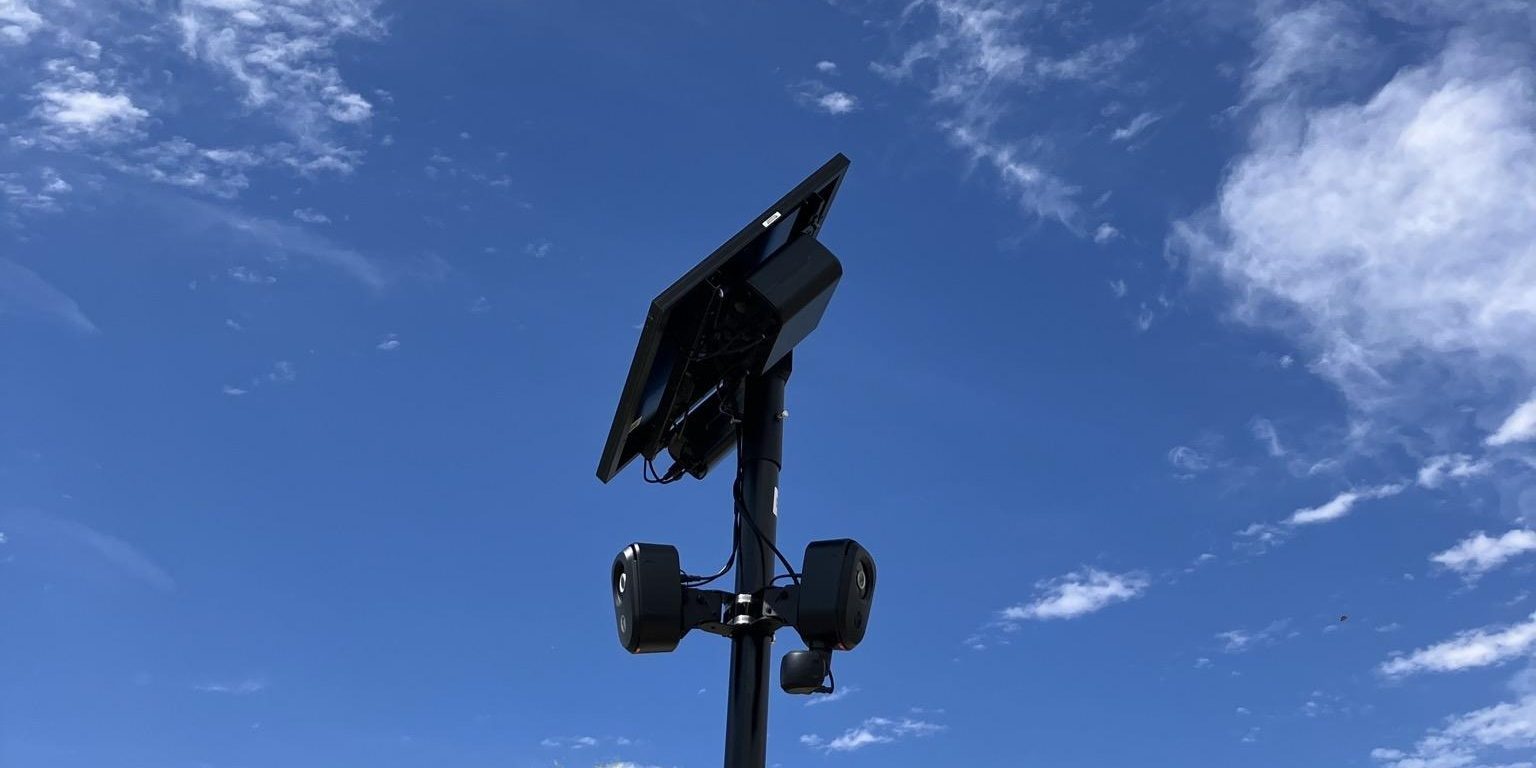
A security researcher’s map revealed more locations of Flock devices than any other. Flock is trying to take it down. The post Flock Wants the Most Detailed Map of Its Surveillance Cameras Taken Offline appeared first on The Intercept .
Page A3From§Eachthe coffee break edition — 29 September 2026
Company pitches the facial recognition upgrade a bill sitting in committee would already ban.
As it ran on the front
The chief pulls the tip: a surveillance company has walked into a police department's inbox pitching facial recognition as an add-on to the Flock camera network, the piece Flock itself has not built. The crew does not need to invent a fix. Someone already built the wrench.
On September 3, Rep. Thomas Massie filed the Flock-Off Act, a bill that blocks federal money from being used to purchase, install, maintain, operate, or upgrade automated license plate readers and biometric surveillance cameras for any city or local police department. The bill was written for a network exactly like this one — a network some local department is now being asked to upgrade with face-matching software, which is biometric surveillance by any reading of the text. The pitch and the fix were drafted for each other.…
…(cont) That is not a flaw in the mechanism. That is a part sitting on the shelf, waiting to be picked up.
The tinkerer starts the build. Bolt the Flock-Off Act's upgrade clause to Sen. Josh Hawley's probe, which on September 4 he widened past Flock itself to cover three more companies running AI-powered camera networks — the same category of company now doing the pitching. It is a wrench and the bolt it fits.
The muscle handles the load-bearing wall first: Flock's own map. On September 24, Flock moved to take offline the most detailed public accounting of where its cameras already sit, built by a researcher because the company had not published one itself. A network asking to add face recognition while working to keep the map of that network out of public view is a structure the muscle does not respect. Down it comes before anything gets built on top of it.
None of it requires a new bill, a new hearing authority, or a new subpoena power. Every part was filed, chaired, or crawled before this pitch ever reached an inbox. The crew's job was never invention. It was assembly.
“They write a bill to stop a camera company from bolting face scans onto local plate readers, then let it sit in a drawer waiting on a hearing date — and a company walks in and pitches that exact upgrade to your local cops anyway. Flock's also fighting to keep the public from counting how many of its cameras are already watching your street. A bill with no vote scheduled isn't a law, it's a press release.”
“Look, nobody's banned anything — the Flock-Off Act hasn't even had a hearing, so technically this company isn't violating a thing that exists yet. Senator Hawley's probe just shows the system working, oversight in real time, that's — okay, oversight that hasn't produced a subpoena yet, but the letter's out there. The map thing, that's a security researcher's project, Flock's not hiding anything, they're just asking a private citizen to take down public information about them, which — hm, that one doesn't really land either.”
The receipts
A surveillance company wants to "close the gap" that Flock won't do, by pitching facial recognition on its cameras.
· Massie unveils Flock-Off Act aimed at restricting surveillance cameras from the morgue, 3 Sep 2026
· Hawley expands Flock camera probe to other AI-powered surveillance systems from the morgue, 4 Sep 2026
This page is a back-issue: the story as it ran, receipts as they were. The current edition is at the front. The byline is a pen name for a column drafted by a machine and checked by the editor: how this is made.