Iran says it has received a U.S. counterproposal to the seven-day ceasefire plan that was rejected by the White House. CBS News' Olivia Rinaldi has more.
Page A4From§Eachthe wee small hours edition — 1 October 2026
Rubio expels Iran's delegation over collapsed talks, mails them a new offer days later
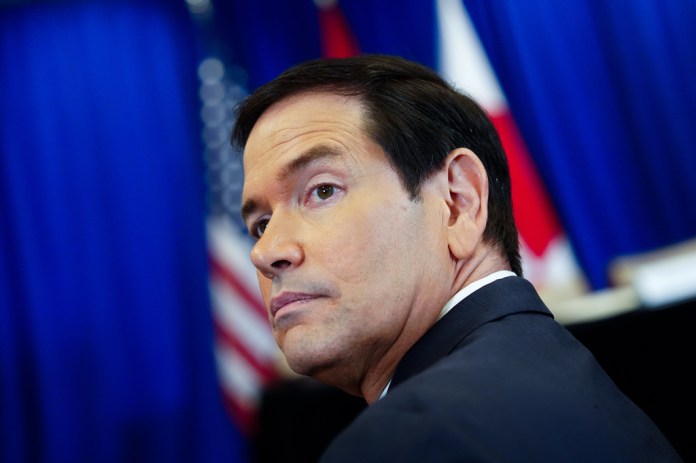
As it ran on the front
Secretary Rubio did the firm thing first. On September 23, with Iran's president and foreign minister already in New York for the UN General Assembly, a bipartisan group of senators wrote to Rubio asking him to use the moment to free an American journalist held in Iran. The administration had leverage in the room — officials talked indirectly with that delegation the next day, no handshake required for resolve.
By September 26 the resolve had a shape. The president confirmed he had rejected Iran's ceasefire offer — a halt on Strait of Hormuz attacks, a return to nuclear talks — the kind of offer a government walks away from once it has decided talking is finished. Iran's foreign minister called the country ready for what he termed a doomsday war on September 27, language that tends to follow a rejection, not precede it. The administration did not walk any of it back. It doubled down the next day, when the UN ambassador said Iran had not negotiated in good faith, that Iranian negotiators had asked for sanctions relief "up front," as though a nine-month war is something a government settles on layaway.…
…(cont) Then Secretary Rubio ordered the Iranian delegation — Pezeshkian, Araghchi, the whole table — out of the country. Talks had collapsed. That is the word used. Not paused. Not recessed. Collapsed. A government does not order a delegation out of a building that still has something to discuss in it.
Except — and here the file stops cooperating — within days of that order, Iran announced it had received Washington's full counterproposal to the ceasefire. The same ceasefire the administration had just finished declaring dead and expelling its authors over. Not a new framework. A response. To the thing that was supposedly over.
I would like to tell you this is layered strategy, pressure married to patience, the two-track approach serious people run when they know what they're doing. I have said that about this administration before and been right about zero of those times. What actually happened is plainer: the government rejected a ceasefire, called the other side's negotiating bad faith, ordered its negotiators out of the country, and then kept negotiating with them anyway — using the words "collapsed" and "counterproposal" in the same week, for what look like two different audiences.
Nobody in Washington has said which audience is being told the truth. The honest possibility is neither one.
“You tell a guy to leave the table because the talks are over, then you slide the same offer under his hotel door a few days later — that's not diplomacy, that's a landlord serving an eviction notice and a renewal lease in the same envelope. The "collapsed" talk is for the cameras at home; the counterproposal is for the room where the actual decisions get made. Either way, nobody in that room works for you or me, and the only people who find out what really happened are the ones with the receipts.”
“Look, expelling the delegation and reopening with a counterproposal the same week isn't a contradiction, it's leverage — you walk away to show strength, then you walk back with a better position, that's Diplomacy 101. Secretary Rubio called the talks collapsed because they had, at that moment, in that room, on that — okay, "collapsed" and "here's our full counterproposal" four days apart is not what collapsed usually means, I'll grant you that one sounds bad out loud. But the point stands that strength and flexibility aren't opposites, they're a sequence, and if the sequence happens to look exactly like making it up as you go, that's a coincidence of timing, not a signal of anything.”
Earlier in this story
- Washington rejects ceasefire Saturday, blames Iran by Monday, resends same offer by Thursday By Sal · the midnight edition, 1 October 2026
- Iran's ceasefire offer has now been rejected, re-offered and re-received for six months running. By Sal · the late evening edition, 30 September 2026
- Iran received Washington's full reply to a ceasefire proposal Trump had already rejected in public. By Sal · the early evening edition, 30 September 2026
- The war keeps hitting new targets while the ceasefire memo stays exactly where it was last week. By Sal · the early bird edition, 30 September 2026
- Iran urges Americans to end the war by voting; the bombing was already rescheduled for after they do. By Sal · the noon edition, 30 September 2026
- President rejects Iran's seven-day ceasefire plan, counteroffers on it, expects the bombing after the midterms By Lou · the breakfast edition, 30 September 2026
The receipts
THE United States ambassador to the United Nations accused Iran on Sunday of not negotiating “in good faith” to end the war launched by his country and Israel. Mike Waltz said that the US had rejected Iran’s proposal to end the war because Iranian negotiators were “asking for everything up front.”
Secretary of State Marco Rubio ordered the Iranian delegation attending the U.N. General Assembly to leave the United States immediately after peace talks to end the nearly nine-month war crumbled, according to a new report. Iranian President Masoud Pezeshkian and Foreign Minister Abbas Araghchi were in New York last week for the United…
Iranian state media said the regime has received a full U.S. response to its proposal for a ceasefire and the phased reopening of the Strait of Hormuz.
· Iran ready for ‘doomsday war’ after Trump rejects ceasefire, foreign minister says from the morgue, 27 Sep 2026
· Bipartisan senators raised US journalist jailed in Iran ahead of Trump team meeting with Iranian delegation at UN from the morgue, 23 Sep 2026
This page is a back-issue: the story as it ran, receipts as they were. The current edition is at the front. The byline is a pen name for a column drafted by a machine and checked by the editor: how this is made.