A woman filed a lawsuit against Cornell University and seven members of the Chi Phi fraternity, alleging that she was the victim of a gang rape in 2024. The school said it supports the decision to reopen the investigation.
Page A7From§Eachthe coffee break edition — 1 October 2026
THE OMISSION
Cornell agrees to outside investigation three days after prosecutors reopen the rape case it helped bury.
As it ran on the front
Chip here. Let's talk about the statement.
The Cornell University campus police, in 2024, took a report from a woman who says she was raped by seven members of a fraternity, and they condensed it before sending it to the Tompkins County prosecutor. That's standard procedure — you take a long account and get it down to what matters. What mattered, in this version, didn't include the word rape. I understand how that sounds. It isn't what it sounds like. It's — when the Times obtained the documents and found her claim missing from the statement prosecutors actually read, that's an editing choice. Did I say editing choice? I mean it's the document that decided whether seven men faced charges, and it left out the part where she says she was raped, and the prosecutor declined to bring charges. Those are two separate facts.…
…(cont) Prosecutor Matthew Van Houten had that condensed statement for almost two years. Then came her full sworn account, obtained by CBS, the one where she says her accused abusers knew she was intoxicated, and the civil lawsuit she filed against Cornell and the fraternity, reported by the Washington Post. Van Houten reopened the case and said he intends to take it to a grand jury. The New York Times then obtained more than a thousand pages from Cornell's own internal inquiry. A thousand pages. The version prosecutors saw was six.
So there's an outside investigation now. Cornell has agreed to let someone else examine how it handled this. I'm not saying the second thing happened because of the first. I'm saying it's what Cornell did right after the governor said it should, and a sequence isn't a verdict, it's just — all right, it's a verdict.
The six-page report is still not public. Cornell says that protects the students named in it — the seven fraternity members, mainly, the ones the condensed version apparently served well enough to keep this out of a courtroom for two years. How long does protecting six pages take? The report that decided the most is the one nobody outside Cornell has read.
“They didn't bury a body, they buried a sentence — six pages decided two years of nothing happening, and the word "rape" never made it to the prosecutor's desk. Call it an edit if you want; the editor worked for the side that didn't get charged. It took a lawsuit, a reopened file and a sitting governor leaning on Cornell before anyone outside that fraternity house got near a grand jury, and the full report she's asking for is still locked up.”
“Cornell's campus police weren't suppressing anything, they were summarizing — that's literally what a condensed statement is, you can't hand a prosecutor the whole file. Sure, the word "rape" didn't make the cut, but a lot got trimmed, that's just tight writing, it's not like it changed the outcome. And agreeing to an outside investigation the same week the governor calls for one shows the system responding — okay, it shows the governor called and Cornell did what it was told, that's still a response.”
The receipts
In a 2024 statement to Cornell University campus police, Jane Doe says that her accused abusers knew she was intoxicated. CBS News' Tom Hanson and Lilia Luciano have more details on this case.
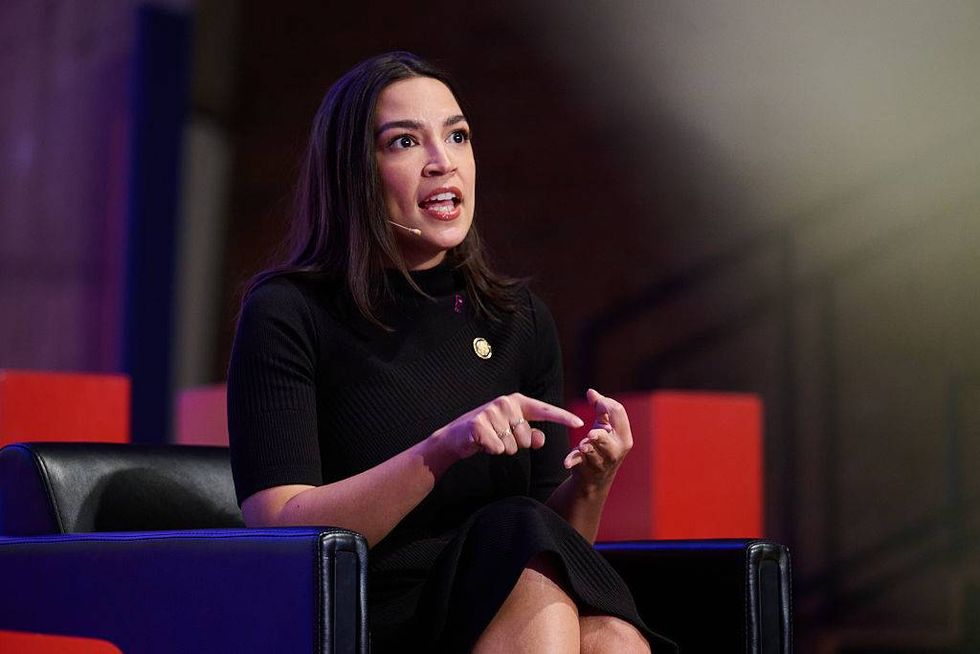
As national outrage grew over an alleged rape of a former Cornell University student by seven members of a fraternity in 2024, US Rep. Alexandria Ocasio-Cortez on Sunday condemned a culture in which students accused of sexual assault are "protected" while survivors like the woman in the Cornell case, identified as Jane Doe, are often…
More disturbing details are coming to light from the alleged Cornell rape victim's official sworn statement obtained by CBS News. Tom Hanson reports.
A New York district attorney is reopening an investigation into allegations that a Cornell University student was drugged and gang raped by seven fraternity members in 2024, nearly two years after prosecutors declined to bring criminal charges. Tompkins County District Attorney Matthew Van Houten said his office intends to present the…
Documents obtained by The New York Times show that the campus police at Cornell University sent a condensed statement to a prosecutor, who then declined to bring charges.
Victims often have to navigate both university and local law enforcement processes to find justice.
Cornell University has now agreed to an outside investigation of its handling of an alleged gang rape at the Chi Phi fraternity house in 2024 which produced no criminal charges, according to New York’s Gov. Kathy Hochul. NBC’s Maggie Vespa reports for TODAY.
The university declined to release a six-page report from the investigation into an alleged gang rape at a fraternity party.
The New York Times obtained more than 1,000 pages from the university’s internal inquiry into accusations by “Jane Doe.” Here are the revelations so far.
This page is a back-issue: the story as it ran, receipts as they were. The current edition is at the front. The byline is a pen name for a column drafted by a machine and checked by the editor: how this is made.