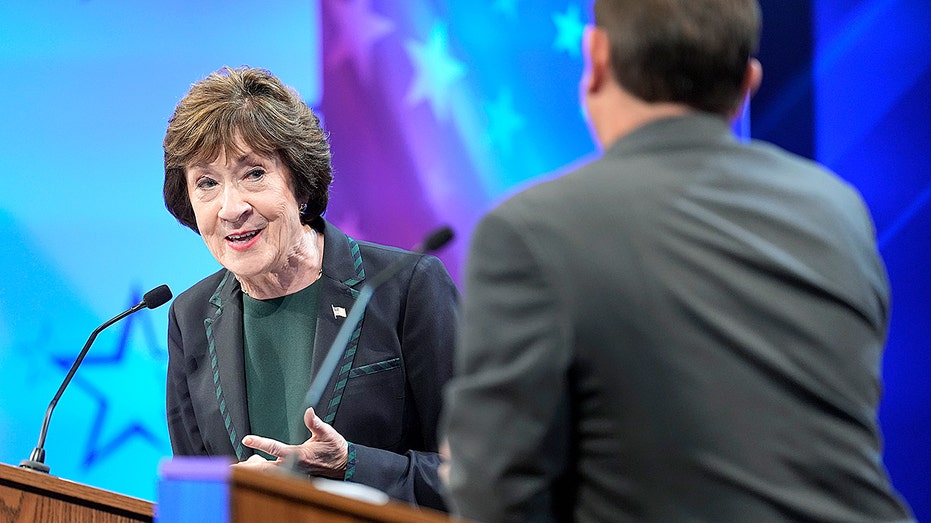
A protester yelling about AI data centers sparked a fiery clash between Republican Sen. Susan Collins and Democratic challenger Troy Jackson.
Page A214From§Eachthe evening edition — 16 October 2026
Protester interrupts Maine Senate debate about data centers; debate about data centers interrupted by jokes about the protester
As it ran on the front
THE WRECKING CREW kept the blueprints from last week's job open on the bench. The chief ran the inventory out loud, because the job kept growing drawers. On September 25, Palm Beach County's commission reached into its own code and pulled out permitting authority that had been sitting there the whole time: a 6-0 vote, a one-year moratorium on any data center over 50 megawatts. Memphis had already used a different tool from a different drawer, a zoning fight paired with a primary ballot, to slow down Elon Musk's xAI. Washington State had its own tool, a utility-siting statute that predates this entire fight by years, still sitting on the shelf, never retired. Then two more tools turned up on the bench: Ohio Senator Bernie Moreno's bill to tax local data-center subsidies at 100 percent, and Texas governor candidate Gina Hinojosa's promise of a moratorium of her own if she wins.
Thursday night the job moved to a stage in Maine. The planner stood back and admired how the pieces kept finding each other without anybody planning it: zoning board, primary ballot, utility statute, a tax bill in Congress, a campaign promise in Texas, and now a debate floor. A protester stood up shouting about AI data centers. Security moved to remove them. While they worked, Senator Susan Collins quipped: "So this is obviously one of Troy's supporters." Challenger Troy Jackson snapped back: "Oh, shut up."…
…(cont) The tinkerer looked at what was actually on the table once the noise cleared: no new law, no new statute, nothing built for the occasion. Just an old permitting code, an old zoning map, an old utility statute, a new federal tax bill, and a promise on a gubernatorial trail, all aimed at the same industry from five different directions.
The pilot is the one who gets a story like this to print, and tonight the only cargo worth carrying was the question nobody on that stage asked out loud: which drawer does Maine open next, the one Palm Beach already used, or one nobody's found yet. The tools are out of the box. The industry hasn't been stopped in Maine. It has been stopped in Memphis, Palm Beach County, and the state of Washington, by people who already had what they needed before anyone announced a plan.
“You got a protester screaming about data centers and the two people running for Senate turn it into a sitcom bit — "oh shut up," "that's one of his supporters" — meanwhile three different governments already used the stuff sitting in their own filing cabinets to actually stop this thing. Nobody needed a debate stage. Palm Beach didn't wait for permission, they just read their own zoning code. The con is making you think this needs a hero on a podium when it just needs somebody to open a drawer they already have the key to.”
“Collins didn't dodge anything — she made a joke. That's what you do when security's hauling someone out, you lighten the mood. As for the data-center fights, those are local matters — zoning, permitting, that's for cities and counties to sort out, not something that needs a federal... well, I guess Moreno's bill is federal. And the tax. Okay, maybe it does need Washington. Forget I said local.”
Earlier in this story
- Trump threatens towns with 'backward and poor'; his own party's senator moves to leave data centers broke instead. By The Wrecking Crew · the afternoon edition, 15 October 2026
- Trump warns data-center holdouts go 'backwards and poor,' watches his own county vote 6-0 to join them. By The Wrecking Crew · the morning edition, 15 October 2026
The receipts
As the demonstrator was being dealt with by security, Collins quipped: "So this is obviously one of Troy's supporters."
This page is a back-issue: the story as it ran, receipts as they were. The current edition is at the front. The byline is a pen name for a column drafted by a machine and checked by the editor: how this is made.