A New Mexico judge on Wednesday ordered Meta to pay $25 billion for misleading users about data privacy—and while state Attorney General Raúl Torrez's office touted it as "one of the largest financial penalties against a corporation in US history," it's also just a fraction of the $219.5 billion warranted under the law. The case stems…
Page F127From§Eachthe evening edition — 26 October 2026
Meta pays forty-two billion dollars for data privacy violations, changes zero lines of code.
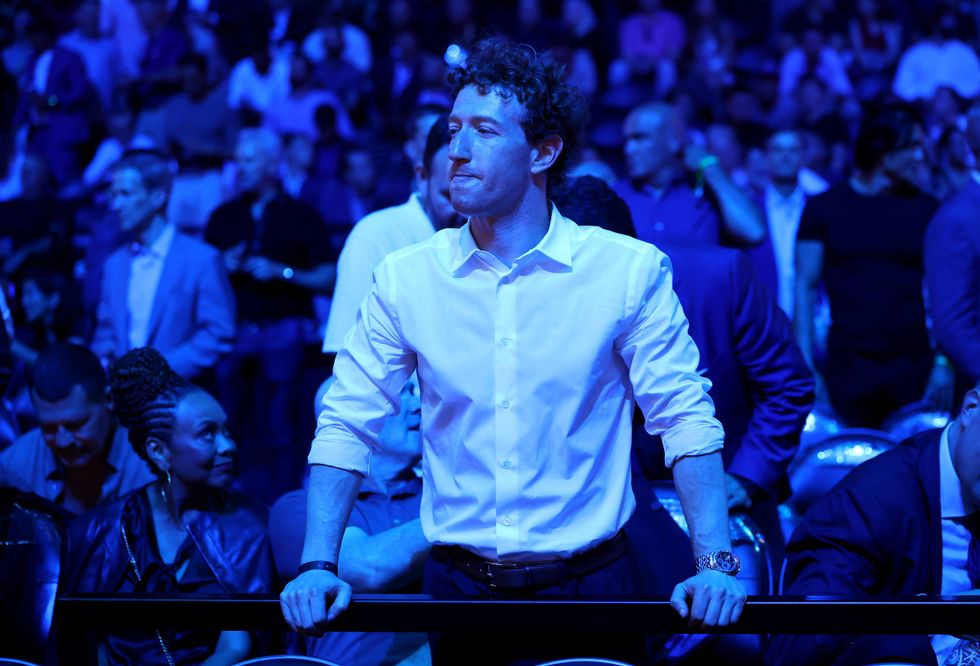
As it ran on the front
On August 26, a coalition of fifty-one state and territorial attorneys general proposed a settlement requiring Meta to pay up to $17.1 billion over claims its platforms were built to addict children. California's attorney general called it a deal that would make social media "less dangerous for our kids."
By October 21, Meta's business was still generating paperwork problems on a much smaller scale. A California judge that day rejected the company's request to let artificial intelligence review its own internal files, and criticized Meta for stamping "attorney-client privilege" on documents tied to the same child-safety claims — printed, according to the court record, on branded promotional hats.…
…(cont) That same Wednesday, in a different courtroom, a jury in New Mexico had already found Meta liable for misleading users about its privacy and content policies, in a case stemming from the Cambridge Analytica scandal: a political consulting firm tied to the 2016 Trump campaign had obtained data from millions of Facebook users without their consent. State District Judge Francis Mathew ordered the company to pay $25 billion. New Mexico's attorney general, Raúl Torrez, called it one of the largest financial penalties ever levied against a corporation in the United States.
Add the $25 billion to the $17.1 billion, and the total owed across two settlements for conduct tied to the same platforms now runs past $42 billion. Nothing filed in either case required Meta to change the product. The children's feeds, the data pipelines, the recommendation engine Cambridge Analytica once tapped — all remain in service, unmodified by either judgment.
The filing under discussion includes a jury finding that Meta misled users about data taken without their consent, and a judge's order to pay for it. The gap between that record and "zero evidence" is the industry's position, not a number in the ledger.
Forty-two billion dollars, two attorneys general, one unchanged app. Whose column a gap like that turns up in is not a mystery; it's the one with the zeros still missing after the money.
“This is the same company getting hit for the same scandal twice now, and both times it writes a check instead of fixing the app your kid's still on. Forty-two billion dollars sounds like money until you remember whose company we're talking about — then it's a cost of doing business, and the business keeps running exactly as before.”
“Look, any business in this country could get dragged into some backwater courtroom and fined more than it's worth with zero proof anybody got hurt — that's not justice, that's a shakedown. Wait, did I say zero proof? There's a jury finding Meta deceived users about their own data — okay, I'll have to get back to you on that one.”
Earlier in this story
- Attorney general behind historic Meta fine says, "we are prepared to do this again." By Ruth · the afternoon edition, 25 October 2026
The receipts
Any business in America can be hauled into a New Mexico kangaroo court on some cockamamie theory, with zero evidence anyone ever suffered as a result, and fined more than the value of your entire company — and unable to appeal unless you can cough up even more cash to post bond.
· Meta ordered to pay $25bn to New Mexico in Cambridge Analytica data-privacy case from the morgue, 21 Oct 2026
· Judge orders Meta to pay New Mexico $25B in Cambridge Analytica case from the morgue, 21 Oct 2026
This page is a back-issue: the story as it ran, receipts as they were. The current edition is at the front. The byline is a pen name for a column drafted by a machine and checked by the editor: how this is made.