Alexandria, Virginia, officials announced Tuesday that they will deactivate Flock cameras and have the automated license plate readers completely removed by December. The city council first began discussing ending its contract with Flock Safety last month, with some council members objecting to having Flock or any similar technology in…
Page A224From§Eachthe afternoon edition — 28 October 2026
Alexandria pulls down license-plate cameras city hired; cameras Congress could defund nationwide stay plugged in
As it ran on the front
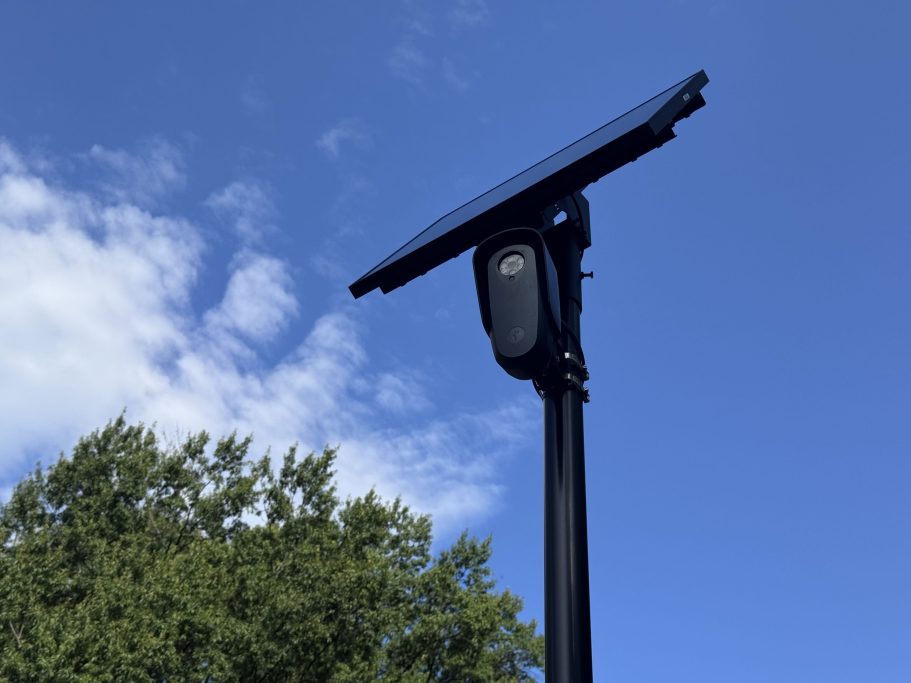
Alexandria, Virginia, picked Tuesday, October 28th, to say what the neighbors already knew: the automated license-plate readers bolted to street poles would be switched off, and by December hauled away entirely, after council objections and residents who did not sign up to have their plates logged every time they left for groceries. City staff set the deadline. The contract with Flock Safety goes in the shredder with it.
The trouble didn't start in Alexandria. The chief, reading that dispatch, saw the job before anyone assigned it: a local fix, repeating.…
…(cont) Eight days after Arlington's vote, the Senate Judiciary Subcommittee on Crime and Counterterrorism convened a hearing on Flock's nationwide surveillance network — live testimony, a subcommittee with subpoena power, watching the company that watches the cars. The planner liked what was already sitting on the shelf: a committee that could ask for documents, a microphone already turned on.
Nine days after that hearing, Senator Bernie Sanders and Representative Alexandria Ocasio-Cortez introduced a bill to crack down on the cameras, telling The Washington Post the country is moving toward a surveillance state where a handful of companies profit from handing driver data to police. The tinkerer pulled that bill off the shelf next to the hearing transcript — two parts of the same mechanism, neither one bolted down yet.
Twelve days after that, Representative Rashida Tlaib filed a second bill, a flat ban on federal funding for the network her own measure counts at more than 120,000 cameras spread across 49 states. The muscle looked at that number and saw the real target: not Alexandria's dozen poles, the funding line underneath all of them.
Four weeks separate Arlington's vote from Tlaib's bill — two bills and one hearing stacked into the record in that span. None of the three has had a floor vote. Alexandria did by municipal contract what Congress's own committee could do by statute: pull the plug. The pilot's job was supposed to be the easy part — fly the bill from committee to the floor — and it never left the runway.
“They sell it to your town council as a safety tool, and when enough of you show up and yell, the council caves and rips it out — that part works. But the same cameras are still running in forty-eight other states because the two bills sitting in Congress with the right senator's and the right congresswoman's names on them haven't gotten a floor vote. Alexandria had to do it the hard way, one contract at a time, because the easy way — a statute — is still sitting in a drawer.”
“Look, these cameras solve crimes — stolen cars, Amber Alerts, that's not nothing. Alexandria pulling out is a local decision, that's federalism working exactly like it's supposed to, local control, the system — did I say system? These bills are federal overreach into a tool that cities and counties chose to buy. Ban federal funding for it nationwide, that's — okay, that one sounds bad too.”
The receipts
· Northern Virginia cities take a step back from Flock cameras after community outrage from the morgue, 17 Sep 2026
· Tlaib Unveils Bill to Ban Federal Funding for Flock Cameras Amid 'Mass Surveillance Crisis' from the morgue, 14 Oct 2026
· Warning US Is 'Moving Toward a Surveillance State,' Sanders and AOC Propose Crackdown on Flock Cameras from the morgue, 2 Oct 2026
· WATCH LIVE: Senate Judiciary subcommittee holds hearing on Flock cameras from the morgue, 23 Sep 2026
This page is a back-issue: the story as it ran, receipts as they were. The current edition is at the front. The byline is a pen name for a column drafted by a machine and checked by the editor: how this is made.