The Justice Department sought an emergency order in the case.
Page B47From§Eachthe evening edition — 29 October 2026
Justice Department calls ballot counting disenfranchisement, loses its bid to stop the count six days before the vote.
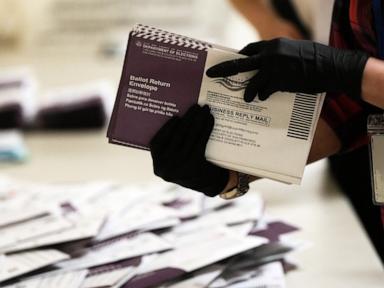
As it ran on the front
My nephew is in his second year of law school, and I take him very seriously, because somebody in this family has to know what a motion is. I called him Wednesday night, after I read that a federal judge in California turned down the Justice Department's request to set aside twenty thousand mail ballots, and I asked him a simple question: if a court says no in the morning, can you take the same ask to a different court by afternoon and call it a new argument?
He said that's not quite what happened. He said what happened is this: the department asked a trial judge to stop the count. The trial judge said no. The department then asked an appeals court, the same day, to say the trial judge was wrong. The appeals court said no too. Same day. I wrote that down — "same day" — because I wanted to be sure I had it right, and I checked it twice.…
…(cont) Is that normal, I asked him. He said normal isn't the word he'd use. He said what's unusual is the pattern — the Supreme Court, back in September, on a different mail-ballot request from this same administration, also said no. The trial court, Wednesday, said no. The appeals court, Wednesday, said no. Three courts. One argument. Does an argument get stronger with use, or does it just get older?
I went out to the garage after that, because the car's been doing a thing where it turns over twice before it catches, and I got to thinking about a word in the department's own filing. The word was "emergency." A lawyer for the department wrote that the delay "disenfranchises American citizens through dilution." I had to read that one twice myself. The ballots in question were cast weeks ago. The letters demanding counties set them aside went out on the 24th. The lawsuit was filed on the 15th. The thumb drive — there was a thumb drive, with a handwritten password taped to it — went to Los Angeles County two days before that. Does two weeks of filings count as urgent, or is that just how long it takes to lose in front of three different courts?
My nephew didn't have an answer for that one. He said that's not a law school question, that's a dictionary question. Fair enough.
What I keep turning over isn't even the two weeks. It's that losing didn't end it. The trial judge said no Wednesday morning. The appeals court said no Wednesday afternoon. By Wednesday evening the department had filed notice that it's appealing again — not reconsidering, not withdrawing, appealing — the same request, headed somewhere else. Six days before an election it would decide, if it worked. Does an argument that's failed at three levels of court get a fourth hearing because the calendar is short, or because the calendar is the point?
I was going to leave it there. But — excuse me, before you go — one more thing, because it's bothering me and I'd be lying if I said it wasn't. The department's own filing said the delay "disenfranchises American citizens." Twenty thousand people, whose ballots a trial judge and an appeals court both said can be counted like anyone else's, are the ones the department says are being disenfranchised — by the ruling that lets their ballots be counted, not by the request that tried to stop it. I don't like to come back to one word twice in a column, and I'm sorry to do it again, but what do you call it when the word for stopping the count and the word for losing the fight to stop it turn out to be the same word — emergency?
“They're the ones trying to stop ballots from being counted, and they're calling that saving your vote — that's the whole con, right there, in their own filing. Three courts told them no inside two weeks, and they filed to appeal again the same day, six days before the election that count was going to decide. That's not a legal strategy, that's running out the clock on twenty thousand people's mail.”
“Look, the department is just making sure every ballot is legitimate, nobody's against counting lawful votes — they just want these twenty thousand set aside first, which, I'll grant you, is the opposite of counting them, but that's due diligence, not — did I say "set aside," that's not the word, let me circle back. Three separate courts used a different word. I'm not going to repeat it.”
Earlier in this story
- Minecraft billionaire lists $70 million mansion seventeen days after Newsom endorsed a measure cancelling the billionaire tax By Sterling · the evening edition, 28 October 2026
The receipts
Justice department had demanded state segregate and not count ballots from people it claimed were non-citizens A federal judge declined to order California election officials to segregate and not count ballots from people the Trump administration claimed were non-citizens, rebuffing a legally thin request from the justice department that…
A federal judge on Wednesday denied the Department of Justice’s bid to force California to set aside mail ballots associated with more than 20,000 suspected noncitizens, rejecting an emergency intervention less than a week before the midterm elections. U.S. District Judge David Carter, an appointee of former President Bill Clinton…
"Every day, more ballots are processed by election officials. This ongoing emergency disenfranchises American citizens through dilution," Essayli said.
While the judge rejected the Department of Justice's unprecedented demand in California, the case isn't over yet. The federal government immediately filed notice that it will appeal.
A federal judge on Wednesday rejected the Trump administration's bid to require California election officials to separate out mail ballots received from roughly 20,000 people it claims are not U.S. citizens.
The judge ruled that no immediate action was necessary, dealing another setback to the administration as it moves to target voting by noncitizens.
The Trump administration's bid to separate 20,000 mail ballots in California that it says are likely noncitizens met another defeat on Wednesday as a trial judge refused to intervene. U.S. District Judge David Carter ruled California can continue to accept the questioned ballots like any other.
A federal judge in California on Wednesday refused the Trump administration’s request to segregate 20,000 mail-in ballots from individuals it alleges are noncitizens.
Democratic Party leaders have sued the Trump administration over the request, accusing Republicans of aiming 'threats and intimidation' at state and local officials before the vote.
· California officials ordered by DoJ to set aside ‘likely’ noncitizen ballots from the morgue, 24 Oct 2026
· Trump administration threatens California officials if noncitizens vote in midterms from the morgue, 17 Oct 2026
· Trump administration threatens California officials if noncitizens vote in midterms from the morgue, 16 Oct 2026
· US justice department sues California over alleged noncitizen voting from the morgue, 15 Oct 2026
· Supreme Court denies Trump’s emergency request to enforce mail-in ballot restrictions from the morgue, 14 Sep 2026
This page is a back-issue: the story as it ran, receipts as they were. The current edition is at the front. The byline is a pen name for a column drafted by a machine and checked by the editor: how this is made.