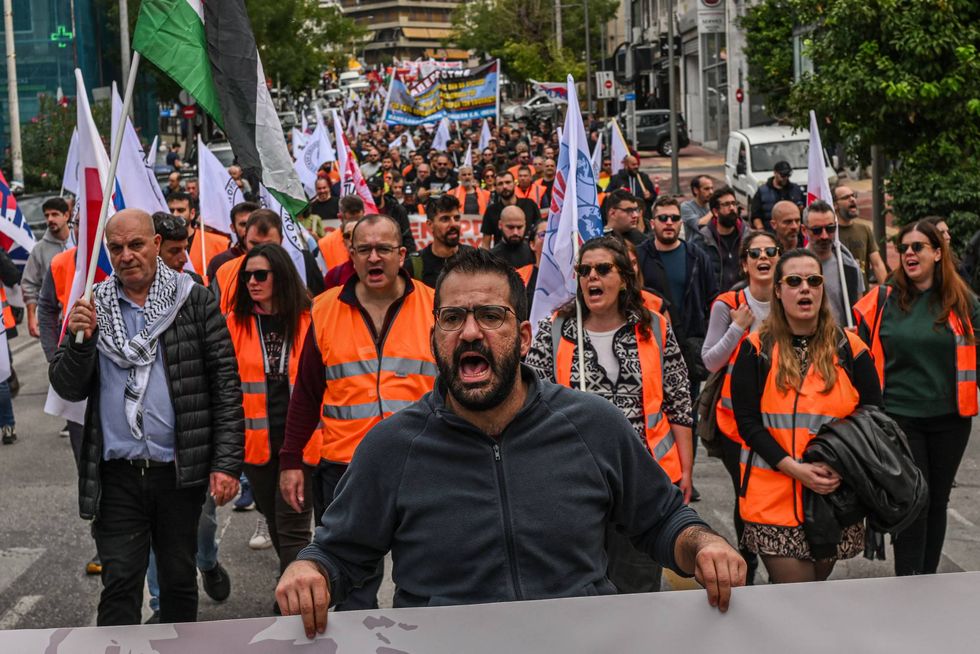
“With 'Largest Coordinated Port Action Ever,' Dockworkers in 22 Countries Strike Against Gaza Genocide”, 30 October 2026 (Photo via Common Dreams — the original report)
As it ran on the front
On Oct. 15, in Rome, the World Federation of Trade Unions stood up at a press conference and launched something it called the International Day of Action of Dockworkers and Port Workers Against War and Militarisation. Two weeks later, the plan became a fact on the water.
Oct. 30 arrived, and 113 ports in 22 countries on six continents stopped moving. Workers World called it one of the largest internationally coordinated strikes in world history; the organizers quoted by Common Dreams called it the largest coordinated port action ever, bigger than the day of action they'd run in February. The banners said "We won't work for war" and "Ports for peace — jobs with dignity." The claim was not abstract: the unions said commercial ports fuel militarism, and on Oct. 30 they declined to fuel it.…
…(cont) In Italy, the stoppage did not stay on the docks. A Tribune dispatch that same week described farmers, truckers, students and dockworkers shutting the country down together — the piece ran under the headline "Blockade Everything," and for once the headline was the inventory. Trucks sat still. Students marched. The docks, already struck, held.
Rome's answer arrived on the same day the strike did. NBC News reported that Prime Minister Giorgia Meloni deployed troops as Italy faced the strikes and the port blockades, with tens of thousands already gathering in Rome, Milan and other cities to protest the cost of living and high military spending. The demonstrations and the deployment share a dateline: Oct. 30.
Lay the two facts next to each other and the shape of the week is plain. The workers' position, stated on their own banners, was that the ports should not move war. The government's position, stated in troop orders, was that the ports — and the streets around them — should move regardless. One side refused to carry the cargo of the war that the other side is still budgeting for. The government did not say, in anything the wire carried, what sending soldiers into Rome and Milan to meet a labor strike costs, or how it is paid for, while the military spending the marchers were protesting stays where it was.
That is the whole transaction. A strike against war, coordinated across 22 countries, lands on one desk — Rome's — and comes back as a deployment order. Not a hearing. Not a number on the military budget. Soldiers, in the same streets where the demonstrators were already gathering, on the same day the ports went quiet. The dockworkers asked the ports to stop carrying war. The government sent troops to make sure something else kept moving.
🍺
“You don't send soldiers to answer a labor contract dispute — you send them to answer a threat to the thing the soldiers protect, and in this country that thing is the military budget. 113 ports in 22 countries say they won't carry the war anymore, and the one government that answers out loud answers with more guns, not fewer. That's not a public-order problem, that's the bill coming due, and they sent the army to collect it instead of paying it.”
“Public order, that's the whole story here — trucks blocking highways, a country trying to get farmers' produce to market, you can't just let that sit. Deploying troops to keep the roads open isn't a crackdown, it's logistics. Did I say "keep the roads open"? The wire says troops went in as the country "faces" strikes and blockades, so — logistics, yeah, that's the word I'm looking for.”
Dockworkers in more than 20 countries—from France to India to Greece—are withholding their labor on Friday to demand an end to Israel's genocidal assault on Gaza and highlight the role that commercial ports play in fueling deadly militarism worldwide. Organizers said the work stoppages, led by dockworkers' unions at 113 ports across 22…
ROME — Tens of thousands of people took to the streets of Rome, Milan and other Italian cities Friday as part of nationwide demonstrations against the cost of living and high military spending.
This page is a back-issue: the story as it ran, receipts as they were. The current edition is at the front. The byline is a pen name for a column drafted by a machine and checked by the editor: how this is made.