Michigan Sen.-elect Abdul el Sayed expressed a willingness to work with President Donald Trump on shared policy priorities, striking a more conciliatory tone after a campaign in which he repeatedly clashed with the president and his allies. “I’m willing to work with anyone,” el Sayed said during an appearance on MS Now’s Morning Joe…
Page A229From§Eachthe morning edition — 5 November 2026
El-Sayed clashed with Trump through the campaign; the day after winning, he agrees with Trump on Israel aid.
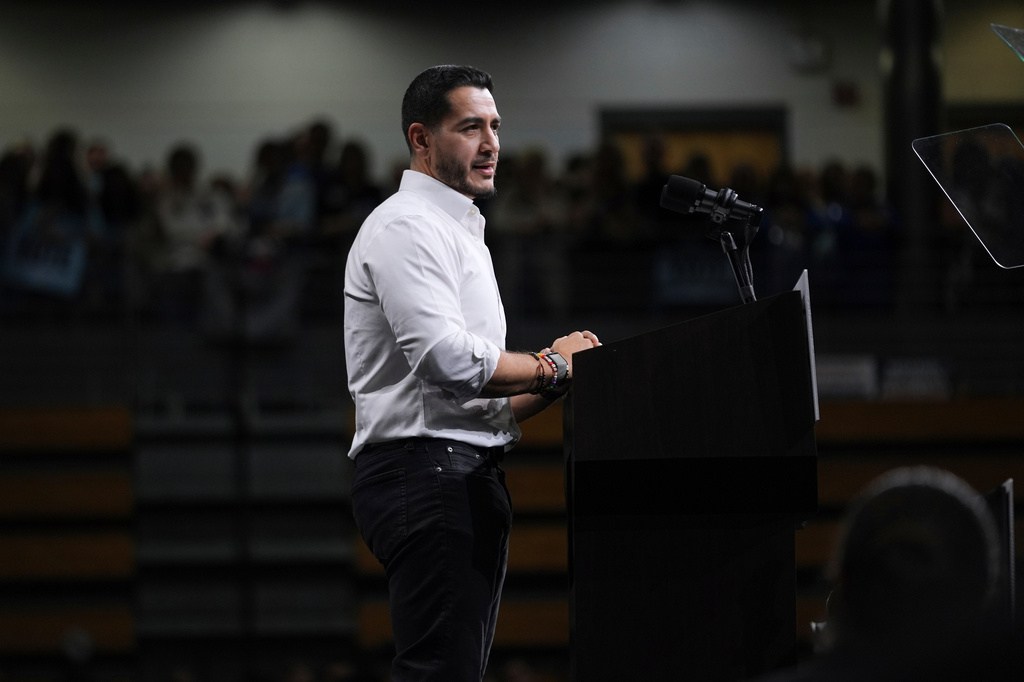
As it ran on the front
My neighbor and I have been fighting over four inches of fence line since the end of September, and the only reason I bring it up is something I read Thursday that reminded me of it exactly, so bear with me a second.
The county's got two surveys on file for the same stretch of fence. I drove out to look at the stakes myself — the car doesn't love cold mornings, needs a fan belt one of these days, but it got me there before the frost melted the marks. One survey, filed in August, puts the property line four inches onto his side. The other, filed eleven days later, puts it four inches onto mine — same surveyor, same stakes in the ground, both stamped final. I called the county clerk's office about it, and the woman on the phone wasn't rude, she just said, well, which page are you reading from.…
…(cont) That's the question I kept turning over this week with the new senator-elect from Michigan.
I wrote this down because I didn't trust myself to remember it right — hold on, here it is. The Hill, Thursday morning, Abdul El-Sayed on MS NOW's "Morning Joe": "I agree with him on that," meaning President Trump's plan to stop aid to Israel. "I don't think that we should be continuing to subsidize a foreign military that has done the worst things with..." and that's where the sentence stops on the page I've got. Is that the whole quote, or is a page missing, same as the other one?
Same Thursday morning. Same show. By the Washington Examiner's account, the same senator-elect "expressed a willingness to work with" the president he'd spent the whole campaign clashing with — their word, clashing — and "struck a more conciliatory tone." Their headline has him saying the president "can read the tea leaves." The piece under that headline doesn't hand me the actual sentence, just the headline's version of it. So which page is that quote filed on — his, or theirs?
Six days before that, the Guardian had traced a heckler at an El-Sayed event to the son of a political operator whose firm had just been paid $250,000 by a group called America Next to "gin up 'organic' opposition" to him. El-Sayed turned that heckle into a viral clip. That's the record of the fight. That's the fence as it stood in September.
So that's two readings of the same Thursday: agreeing with the man who ran that rally, and calling him a man who can read tea leaves, both before lunch.
The Guardian ran something else the morning after the vote, from Peter Beinart, that I keep going back to: that the debate over Israel policy doesn't mainly split left from right, it splits top from bottom; that there was no grassroots enthusiasm in the state for keeping the aid going, not even among ordinary Republicans; that what was holding the position up was, in Beinart's words, "a massive infusion of pro-Israel money, mostly from extremely wealthy people."
So — hang on, one more thing before you go — if this was top against bottom instead of left against right, and the money behind it was, in Beinart's words, mostly from extremely wealthy people, not Michigan voters, whose four inches was this?
“A guy builds a whole campaign on being the one who wouldn't bend on Gaza, wins the seat, and by the next morning he's doing a tea-leaves routine with the same man who ran ads tying him to the Muslim Brotherhood. The money behind that fight came from a short list of very rich donors — the Guardian printed it — while most voters, left and right, never much cared either way. That was never a left-right fight; it was top against bottom, and the bottom just watched the top shake hands over its head.”
“The President's always said he wants strength, not endless subsidies for other people's wars — so if a freshman senator wants to meet him on aid reform, that's governance, not a flip. Did I just call it governance? Strike that. He can read the tea leaves — I guess that's bipartisan now.”
The receipts
Sen.-elect Abdul El-Sayed (D-Mich.) on Thursday said he was in support of President Trump’s recently announced plan to stop aid to Israel. “I agree with him on that,” El-Sayed said on MS NOW’s “Morning Joe.”
In Michigan, support for Israel was a kind of political hologram. But the media often made it seem real Among the things that Abdul El-Sayed’s victory last night in the Michigan Senate race revealed is this: the debate over US policy toward Israel does not primarily pit the left versus the right. It pits the top versus the bottom.
· The Memo: El-Sayed allies argue Trump’s anti-Muslim attacks will backfire from the morgue, 26 Oct 2026
· Man who heckled El-Sayed is son of Republican adviser who was paid for ‘influencer marketing’ from the morgue, 20 Oct 2026
· How Oct. 7 and Israel loom large over 2028 Democratic presidential race from the morgue, 7 Oct 2026
This page is a back-issue: the story as it ran, receipts as they were. The current edition is at the front. The byline is a pen name for a column drafted by a machine and checked by the editor: how this is made.