The number goes up to 2.6 in majority-Hispanic neighborhoods and 4.2 times in majority-Asian neighborhoods.
Page A240From§Eachthe morning edition — 19 November 2026
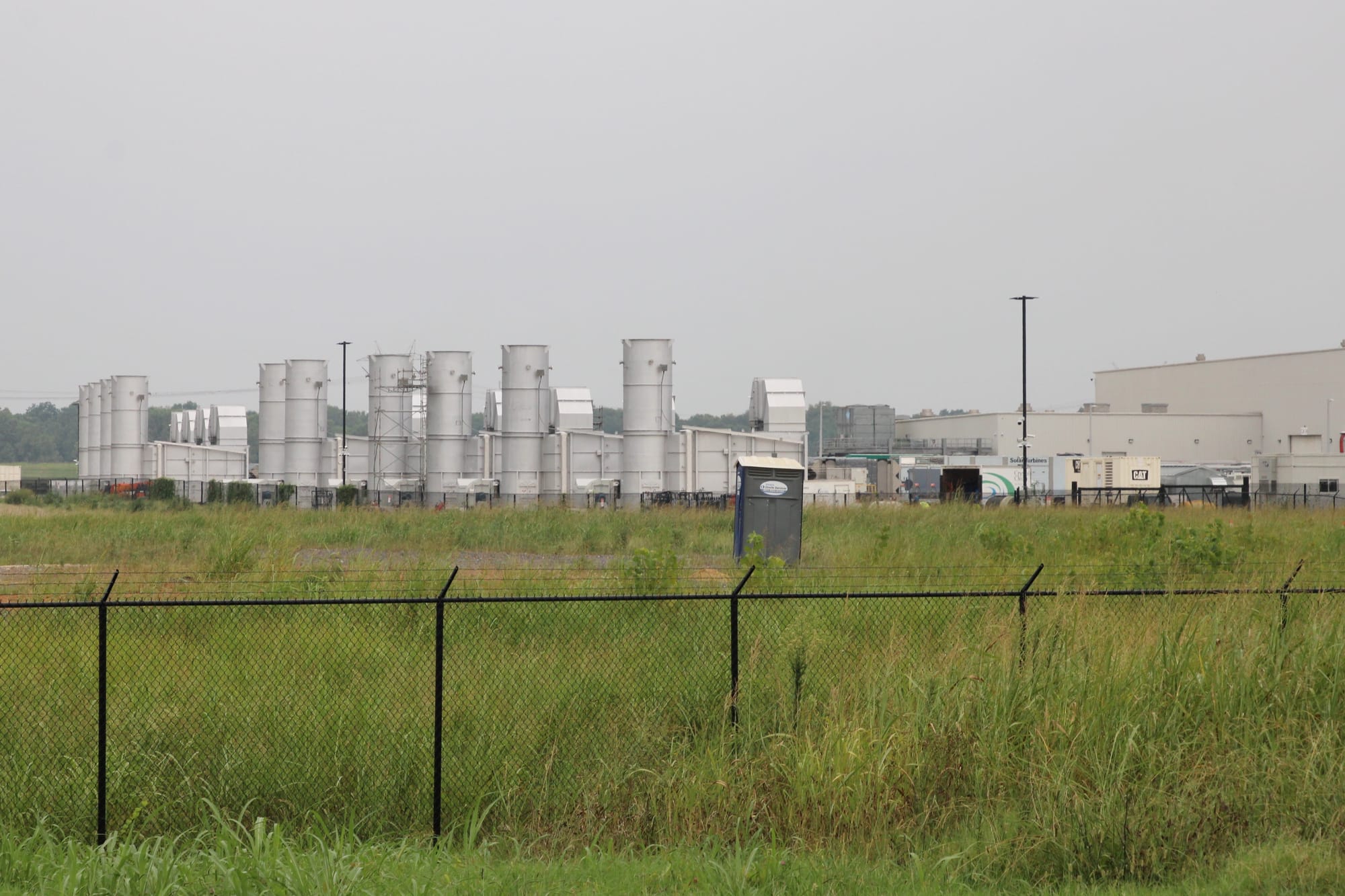
Data centers stack up in Black, Latino, Asian neighborhoods; the only federal brake stopped one, ever.
As it ran on the front
I need a favor from somebody, and I'd like it to be whoever ran the numbers on this, because I can't run numbers — I can barely run my car most mornings. They're the only ones in the whole file who actually counted something instead of guessing at it, so I'd like them to walk me through what they found, slow, because I write slow.
I wrote this down somewhere — just a second, ah, here it is — a researcher looked at where data centers in this country actually get built, lot by lot, and found a Black neighborhood ends up with one twice as often as the rest of the map. A Hispanic neighborhood, two-point-six times. An Asian neighborhood, four-point-two times. I read that third number back to myself three times before I believed my own handwriting, which tells you something about my handwriting, maybe, or something else.…
…(cont) Now, the same election that gave us that map — I wrote down that a handful of Native American candidates ran specifically against these data centers, on the water they take and the land they sit on, and won their races. The same season, a hundred and fifteen groups, by my count, asked the federal government for a moratorium on building any more of these on public land. I don't know what a hundred and fifteen groups agreeing on one letter looks like, but I wrote the number down carefully, because it seemed too big to be a typo.
And Texas paused its own permits before its own election, and then — once the election was behind it — picked the review back up again this week. The top Republican on energy in the House ruled out any federal ban on any of it. None. So there's that, I suppose, written down plain as anything.
I think about the toll plaza some mornings, where I sit because my car won't make exact change anymore and neither will I. Some mornings you pick your own lane — the cash one, the fast one, whichever one your bumper happens to be pointed at. And some mornings they close a lane on you, and you just sit in whichever one's left, however long it takes, and nobody out there asks your opinion on which lane that was going to be. You didn't choose it. You found out you were in it.
Oh — before you head out, one thing, if you've got a second. The only brake anybody has pulled on any of this, anywhere in the whole file, is one federal panel, stopping one project, on public land, back in September. One panel. One project. And — I'm sorry, I know I already asked you about that map once — a Black neighborhood ends up with one of these built in it at double the rate of the rest of the country. I've got both of those numbers written on the same page, one under the other, and I keep going back and forth between them. Is one project, stopped once, the same size brake as a number that comes up twice?
“They tell you there's no money for guardrails until a map shows whose backyard keeps losing. One federal panel pulled one brake all year, Texas pulled its own back the week after its election, and the neighborhoods eating this get filed under "twice as likely" like it's weather. It's not weather. It's where the permits get signed, and who gets a vote on it after the fact.”
“Nobody's zoning by race here, siting follows the power grid and land costs, that's just economics. And Texas resuming permits the week after its own election isn't political, the audit was always going to wrap up eventually — sure, convenient timing, but that's not — okay, moving on. The top House Republican ruling out a federal ban is a states' rights position, full stop, which is also, conveniently, the position with zero federal brakes in it.”
Earlier in this story
- Same Judge Blocks Trump's Arch Twice for the Same Reason By Roy & Lois · the morning edition, 19 November 2026
- Abbott paused Texas data center permits in September; the election passed, and state regulators resumed reviewing them this week. By Mort · the evening edition, 18 November 2026
- A monument Trump can't pay for now faces four lawsuits, the newest from the family in its shadow. By Mort · the evening edition, 11 November 2026
- A panel of Trump appointees approved his 250-foot arch for drones and snipers with no appropriation behind it, and a federal judge halted work before midnight. By Mort · the evening edition, 8 November 2026
The receipts
· US data centers emit more greenhouse gases than Denmark, Harvard study finds from the morgue, 16 Nov 2026
· The Midterm Battle over Data Centers: Memphis House Candidate Justin Pearson Fights Elon Musk's xAI from the morgue, 15 Oct 2026
This page is a back-issue: the story as it ran, receipts as they were. The current edition is at the front. The byline is a pen name for a column drafted by a machine and checked by the editor: how this is made.