From§Each

FIRST YEAR FRIDAY, 30 OCTOBER 2026 — THE MORNING EDITION FREE, FOREVER — EVERY CLAIM LINKED

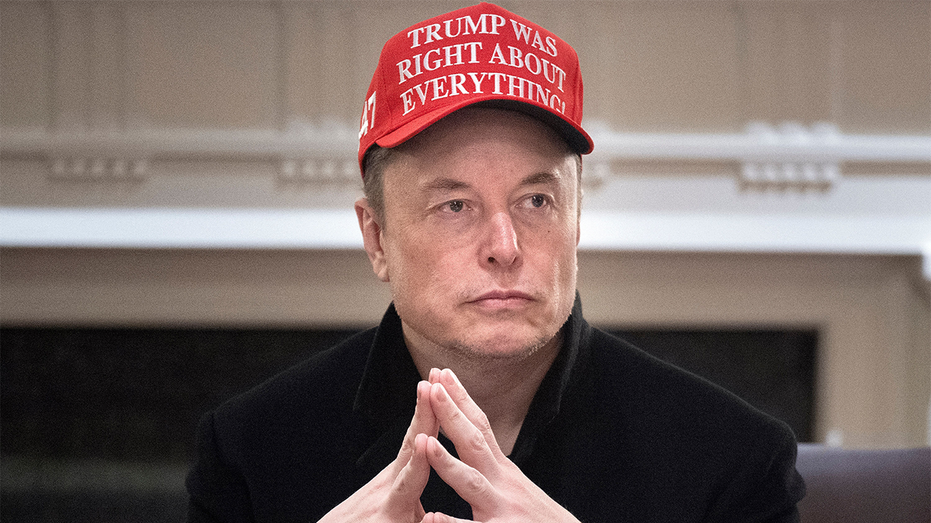
Called out by name for trying to buy Texas, Musk raises his spending to $445 million.

photo: Fox News

Set the two weeks on the table and the numbers settle by themselves, hon, before anyone says a word about them.

On September 25th, the Supreme Court let the Department of Homeland Security run its SAVE database against state voter rolls for the final ninety days before the election, while a student ID law in New Hampshire lost its chance twelve days out. Ninety days to clean a list. Twelve to prove a name belongs on it. The filing on that gap already ran once, so it stays on the table here, not the front of the ledger.

On October 12th, the tally for Elon Musk's midterm giving came back at $276 million, "absolutely insane" was the word used at the time. …

Continued on Page F131

Asked how it identified suspects, Justice Department responds with criminal subpoenas instead of an answer.

You're sharp people, so I'll just say it: a smart operation doesn't make the mistake that's sitting on page nine today, the one where twenty thousand names went from a civil list to a grand jury in a single day.

Continued on Page A225

§77 —

On the Sharpie

Democrat

Democrat: the needle points at NO UPDATES BEYOND 2024, out of THE SHARPIE, 5 PERCENT, COMPLETELY DESTROYED, NO UPDATES BEYOND 2024. THE SHARPIE 5 PERCENT COMPLETELY DESTROYED NO UPDATES BEYOND 2024

The map. The forecast gave southeastern Alabama about a 5 percent chance of tropical-storm-force winds, and the Birmingham weather office had posted that "Alabama will NOT see any impacts"; two days after the marker, an unsigned NOAA statement said Birmingham "spoke in absolute terms" 1. The Commerce Department's inspector general found in 2020 that "the Department required NOAA to issue a Statement that did not further NOAA's or NWS's interests" 2.

The count. On May 8, 2025, NOAA announced that its Billion-Dollar Weather and Climate Disasters product "will be retired, with no updates beyond calendar year 2024" 3. After losing staff, the National Weather Service was allowed to hire 450 meteorologists, hydrologists and radar technicians that August 4. And the council's recommendation for the agency that pays out after a storm: aid only for homes "completely destroyed" 5. In 2019 the storm was drawn somewhere else. In 2025 the tally of storms was stopped.

Sources

  1. About a 5 percent chance of tropical-storm-force winds in southeastern Alabama; Birmingham: "Alabama will NOT see any impacts"; NOAA: Birmingham "spoke in absolute terms" — WSFA, 6 September 2019 ↑
  2. "The Department required NOAA to issue a Statement that did not further NOAA's or NWS's interests" — Commerce Department inspector general, OIG-20-032-I — Nextgov, July 2020 ↑
  3. The Billion-Dollar Weather and Climate Disasters product "will be retired, with no updates beyond calendar year 2024" — NOAA NESDIS, 8 May 2025 ↑
  4. The National Weather Service allowed to hire 450 meteorologists, hydrologists and radar technicians — House press release from Reps. Flood and Sorensen, 7 August 2025 ↑
  5. Aid only for homes "completely destroyed" — Government Executive, 7 May 2026 ↑

“It's the little loop that bothers me. The forecast map from August 29th, and then on September 4th there's this extra curve in black marker, reaching into Alabama. The forecast gave southeastern Alabama about a five percent chance of tropical-storm winds; the Birmingham office said Alabama would "NOT see any impacts." Two days later, an unsigned statement took his side. The next year the inspector general wrote it "did not further NOAA's or NWS's interests." Excuse me — I forgot my umbrella. The loop was drawn in 2019. Who's drawing the map now?”— Lou

“The Sharpie. September 2019, the official forecast map in the Oval Office, and there's a black loop drawn into Alabama. "I don't know, I don't know, I don't know." Then the weather agency was made to back him, and the Commerce Department's inspector general said the statement didn't serve the agency. Last year they found a better pen. They retired the count of billion-dollar disasters — "no updates beyond calendar year 2024." You don't have to redraw the storm if you stop keeping the map.”
Sal
“The president was simply being cautious about Alabama, and caution is what you want from a leader during hurricane season, and retiring the disaster count is caution too, since you can't be alarmed by a number no one publishes.”
Chip
The Word today —
Continued on Page W77

Alaska's four-agency probe into a same-name candidate has produced zero charges, one on-air clarification: not illegal.

You will want the order of operations, so here it is, clause by clause, all together now.

Continued on Page B47

LAST RALLY

President cancels two rallies, upgrades to a 19-state phone sprint, warns voters Democratic wins mean less federal help.

The retail campaign rally died this week in nineteen states at once, survived by a conference-call format and a plainly stated threat of withheld federal aid.

By Thursday the format had nothing left to open with anywhere. ABC News and RTÉ each reported the same fact: the president canceled his last two in-person rallies, in Iowa and Kansas. The Republican National Committee did not call this a retreat; it called the replacement a seventy-two-hour sprint — tele-rallies across nineteen states, the president's voice carried by phone line into rooms his motorcade will not reach before Tuesday, voters who, the committee said, "want to hear from President Trump before Election Day."

What they will hear, ABC News reported the same day, is a price. The president has been signaling to the same states that federal help will be "far less likely" if their voters elect Democrats. The rally died; the ask survived it, cheaper to produce and harder to walk back, because nobody can clip a phone call into a thirty-second attack ad.

The threat did not arrive alone. On Monday the president offered a $1 million reward, paid on arrest and conviction, for reports of voter fraud in this election and past ones. On Tuesday the advocacy group Demand Justice found that 53 of 60 battleground House and Senate races sit in districts or states with at least one Trump-appointed, election-denying judge on the bench. In August the Supreme Court had cleared ground for the fight, lifting an injunction on the president's mail-in-voting order 6 to 3. And in Texas, campaigning for other Republicans, the president touted the oil prices he once predicted a war with Iran would bring — "I knew that oil would go up" — while on a nearby tarmac, before his own flight to Michigan, the vice president was asked about the president calling that state's Democratic Senate candidate a "jihadist" and responded to the question.

None of this is bunk; all of it is dated, filed, and on the record before the polls open. The retail rally is survived by a phone line, a bounty, and a bench. It was preceded in death by the economy, as a thing a campaign was still willing to run on. In lieu of flowers, count the days left, and vote anyway.

Continued on Page B47

Trump's own county votes 6-0 against the data centers he calls the cure for 'backwards and poor.'

You're smart enough to count to six, and six is the whole test this week — six is how many commissioners in Palm Beach County voted, unanimously, to block the very thing the president says is the alternative to towns turning 'backwards and poor.'

I wrote something down, hold on — I know I have it here — a column in Fox News, October 30th, a man named Chris Johnson, writing that the data center boom is rescuing forgotten towns, Ellendale, North Dakota, all the way to Loudoun County, Virginia — his sentence, not mine — 'billions in tax revenue and lower property taxes.' Both claims, one breath. I read it three times to make sure I had it right.

Then I got in the car — the one with the belt that squeals on cold mornings — and I sat there a minute with the glovebox open, because I keep clippings in there too, the ones that don't fit in my jacket, and I found this one: a Gallup poll, reported September 4th, that found Americans would rather live next to a nuclear power plant than next to a data center. Not by a little. By more than twenty points. I don't know what you do with a number like that except write it down twice, which I did.

So here's a question for you, and I think you can answer it from what's already on the page: if the boom is rescuing towns, why would a Gallup poll find people would rather take the reactor?

I kept going. That's their sentence. The thing that thinks against the building that houses it, and the building is losing.

Then there's the other column, the New York Post, October 29th, 'build, baby, build,' it says, measuring us against the United Kingdom, like the UK is the warning and we still have time. I don't know the UK well enough to argue with that part. I just know what's in my own glovebox.

And the president — I had this on a torn corner, August 31st, a social media post — warned towns that refuse will end up worse off. He used two specific words for it. I'm not going to use them yet. I wrote them down separate, on their own line, for later.

Here's where I get stuck, and maybe you won't — Palm Beach County is the president's own county. Mar-a-Lago sits in it. Six commissioners, zero dissents, a one-year moratorium on anything over fifty megawatts, passed September 25th. Not a poll this time. A vote. On the record. By his own neighbors.

Oh — before you go — one more thing, because I almost forgot I had it, right here, under the Fox piece, in my own handwriting even: if the towns that take the deal are the ones getting rescued, what do you call the county that voted no and happens to be his?

I don't have a word for it. I only have the two he gave me: backwards and poor.

Continued on Page F130

Billionaires spend $333 million fighting a wealth tax the Times just called "easier said than done."

On October 23rd, the Guardian's rundown of this fall's 145 statewide ballot measures listed one line without a name or a number: "a novel wealth tax on California's billionaires," filed alongside Alabama's question about the national anthem in schools.

Four days later, on October 27th, the name and the number arrived. Common Dreams reported that Proposition 40, a 5 percent tax on billionaire wealth, had drawn $333 million in spending from the billionaires fighting to defeat it. One Golden State tech billionaire suggested he would not leave California even if voters passed it. Senator Bernie Sanders asked the obvious question back at them: "Against what? Homelessness? No. Cancer? No. Child poverty? No."

By October 30th, the same week carried a second entry. The New York Times ran a piece headlined "Tax the Rich? Easier Said Than Done," reporting that the economist Natasha Sarin believes there are better ways to make billionaires pay than a direct wealth tax. The Times did not say what those ways are.

That same day, the New York Post ran two separate pieces on Xavier Becerra, California's candidate for governor, for proposing a new tax to address the state's affordability crisis, and, again, for proposing it five days before the election instead of waiting, as the Post noted most politicians do, until after.

Line the three up and the gap closes itself. One newspaper tells its readers that collecting from billionaires directly is a hard problem academics are still working on. The opposition to the one proposal that reached an actual ballot is not waiting on the academics; it has already spent $333 million to defeat it. And a candidate who said the word "tax" out loud, five days before anyone could vote on it, got two separate stories written about his nerve.

The economist says there is a better way to get the money. The billionaires say there is no good way at all, and they have put a price on saying so: $333 million against a single ballot question. Becerra found out what the much smaller version of that question costs a candidate who asks it five days early.

Continued on Page F130

Bolsonaro loses Brazil's election, flees to US with Trump's help, declares himself its leader.

Today we are making a president who is not a president, which is not a dish you can get over here. Flávio Bolsonaro lost Brazil's run-off, left for the United States with his family, and called himself leader of Brazil.

You will need one senator, Flávio Bolsonaro, defeated and facing multiple criminal investigations in Brazil; Trump and his aides, who saw to it that he could enter the United States; and a letter, posted briefly under his name, whose "president elect" phrasing an ally later blamed on ChatGPT.

Clive An ally explaining his words for him. I have never needed an ally for mine — the verse stands on its own, which is more than this letter can say.

Gary Stands on its own. Like the shed door, until I took it off for standing on its own all wrong.

A tip, since we are at the stove: a phrase borrowed from a machine rarely survives a second reading.

On 5 October other Bolsonaros were already taking seats down the ballot as the far right surged; France 24 asked whether Brazilians subscribe to the family's "God, Homeland, Family" mantra and left it open. On 26 October Lula took Sunday's run-off, a "historic victory," Common Dreams called it, over the son of a convicted coup-plotter.

Rob A historic victory. That's what the landlord called it when he put the rent up in line with history, and we're still finding the history in the boiler.

Keith History in a boiler is a story. I could have that in a box by Thursday, the right label, and the only one asking questions is me.

On 29 October the New York Times reported that Trump and his aides saw to it that Flávio Bolsonaro could enter the United States.

Gary Back door unlocked. Ours has been off since March, which is less foreign policy and more me, and that took considerably more nerve.

He kept moving: Flávio Bolsonaro calls himself "leader of Brazil," the BBC has him leading the opposition from the United States. You will be looking for the conviction behind that claim. The Times has him only under multiple criminal investigations, not a conviction.

The paper on the table here is France 24: "Flávio Bolsonaro's great escape," it asks if this is "the beginning of the end for 'Bolsonarism.'" The New York Times, at home, simply has Trump and his aides who "Helped Bolsonaro Flee Brazil and Enter U.S." — no escape in it, only the help.

It serves one senator with no office and an opposition he has declared from a country that is not his; Brazil is left with the investigations still open, and the United States is left holding the door.

Rob Investigations still open. That's the stove as well, mate — ours has been going unwatched since March, and at least Brazil knows who struck the match.

Continued on Page A225

Nvidia calls its CEO's China intelligence ties debunked, then defends those same ties.

I asked this already, didn't I? Same case, same page, same question, and I wrote the answer down the first time: was the matter debunked. Yes. Clean, one word, filed. I'm asking it again today, exact same words, and this time it doesn't come out the same shape at all.

Here's what I mean. I wrote this down — hold on, it's in here somewhere — Thursday, Nvidia, on the record: "thoroughly investigated and debunked last year." That's the sentence. I read it three times this morning making sure I had it right, because it's a tidy sentence, the kind you file and move on from. A company says a thing was investigated, a company says it was debunked, a company says it happened last year, which means it's settled, which means there's nothing left to ask about it. That's the whole point of a sentence like that.

So then why'd the same company put out a second statement the same day?

I've got that part written down too. The second one wasn't about the investigation. The second one was about the relationship — Jensen Huang's relationship with the executive, a woman the paper says U.S. intelligence agencies have accused of gathering information for Beijing. Nvidia defended that relationship. Not by saying the allegation was false, not by saying the case was closed — the company stood behind the connection itself, the same connection the first sentence said had already been investigated and put away.

Can a thing be settled and also still need defending?

I've got a toll transponder in the glovebox of a car that needs a fan belt worse than it needs gas, and every so often a bill shows up for a toll I already paid. The agency's letter says the account's clear. Then the next envelope's a notice about the same stretch of road. Nobody at the toll authority tells you which letter was wrong. They just send both.

The paper's sourcing here is American intelligence agencies, not a blogger, not a rival — agencies, on the relationship between the CEO of the most valuable chipmaker in the country and a Singapore-based data center executive the agencies say was funneling information to Beijing. The president was briefed on it. I've got that part down word for word because it's short: briefed, and took no action.

No action on what, is my question. On the relationship Nvidia just finished calling settled, or on the relationship Nvidia then turned around and defended the same week — and if it's the second one, is that the same relationship as the first, or a different one that happens to have the same two names attached to it?

I'm not the only Chinese-national case open this month. Three weeks back it was a California construction man accused of helping surveil a Taiwanese president's son. Different file, different agency, same month, same country doing the accusing. I'm not saying they're the same case. I'm saying they're the same month.

So here's where I'm stuck, and I'd appreciate the help. If the first statement closes the book and the second statement reopens the same page to defend what's written on it, which one do I file the case under — closed, or open?

Oh — before you go. One more thing's been bothering me. The first statement said "last year." The second statement, the one defending the relationship, didn't come with a date on it at all. Is a relationship that still needs defending today the same relationship that got debunked last year, or is "last year" doing a job in that sentence the calendar doesn't actually back up?

Continued on Page F130

Investigative Reporting

THE LEDGER FILES AFTER THE VOTE

Chapter 2: A Mineral Resource Pertaining to the National Defense

Here is a piece of paper. Page 1110 of volume 43 of the Statutes at Large, chapter 426, approved on the third of March, 1925, and it begins with a title so long it is practically an argument: "An Act Authorizing the conservation, production, and exploitation of helium gas, a mineral resource pertaining to the national defense, and to the development of commercial aeronautics, and for other purposes." Your balloon is in there. It is filed under "other purposes." Last week I left you with the question of why a government would want to own a gas. The Interior Department answered it for Congress in 2013 in one sentence: "Because of helium's potential to lift military reconnaissance devices high…

Continued on the Investigative Reporting page
§
§
“The front page is a ledger with better fonts. Somebody paid, somebody collected, and the flag's up there so you don't ask which one you were.”
— Sal

FOR SALE Frontier AI, government price: one dollar. The first one's free. You know what we call that. — Classifieds

FOR SALE Eight straight failed Pentagon audits, one careful owner. Payment plan: another budget increase. — Classifieds

FOR SALE Reflecting Pool, painted flag-blue, now algae-green, $14 million. Drains sold separately, repeatedly. — Classifieds

“A strong edition for people who enjoy being upset. The economy is historic, the deportations are orderly, and the lakes have never been better named. I'm told every story on this page is real, which — frankly, that's the part I'd have fact-checked.”
— Chip
By spring the dog sleeps in the shed. A man finds fewer hens at dusk.
Enoch · the Ownership Desk

The futures fileevery date somebody set, and what was standing there when it arrived · swept 2026-09-16

3 earlier
4 weeks quiet
2 weeks quiet
2 weeks quiet
2 weeks quiet
+ more
+ more
+ more
today
+ more
+ more
+ more
+ more
+ more
+ more
2 weeks quiet
+ more
+ more
19 further out

The Political Weather

Rain floods the checkout line again this morning, where 73 percent of adults disapprove of the way the president is handling inflation and rising prices, his worst mark of any issue this survey tested, worse even than his marks on the cost of living, 72 percent, and the economy, 66. The same five-day read held Democrats nine points up on the generic ballot for Congress, 53 to 44 among likely voters. Bring an umbrella and a wheelbarrow for the receipt. Back to you, everybody. — Gordy

Reuters/Ipsos, Oct 22-26, 1,679 adults — 73 percent of adults disapprove of the president's handling of inflation and rising prices, 19 percent approve, 6 percent don't know, 2 percent skipped, the highest disapproval of any issue tested in the survey; disapproval of his handling of the cost of living is 72 percent, of the economy 66 percent; among likely voters, 53 percent back the Democratic candidate for Congress, 44 percent the Republican, 2 percent another party, 2 percent skipped, a nine-point Democratic lead

The temperature is the day’s poll, not ours: the freshest public number on whatever the country was just asked, and it opens its own sources. The season — the president’s approval, averaged and dated — waits behind the temperature until a new wave lands.

The Crossings

The senate card — eight of 14 crossDRGeorgia — D-held. the call: Democratic hold.GANorth Carolina — R-held. the call: Democratic flip.NCNew Hampshire — D-held. the call: Democratic hold.NHMichigan — D-held. the call: Democratic hold.MIOhio (special) — R-held. the call: Democratic flip.OHTexas — R-held. the call: Democratic flip.TXMaine — R-held. the call: Democratic flip.MEAlaska — R-held. the call: Democratic flip.AKMinnesota — D-held. the call: Democratic hold.MNKansas — R-held. the call: Republican hold.KSSouth Carolina — R-held. the call: Republican hold.SCIowa — R-held. the call: Republican hold.IANebraska — R-held. the call: Republican hold.NEMississippi — R-held. the call: Republican hold.MSThe house card — seventeen of 23 crossDRVirginia 2nd — R-held. the call: Democratic flip.New Jersey 7th — R-held. the call: Democratic flip.Wisconsin 3rd — R-held. the call: Democratic flip.California 22nd — R-held. the call: Democratic flip.Iowa 3rd — R-held. the call: Democratic flip.Pennsylvania 10th — R-held. the call: Democratic flip.Texas 34th — D-held. the call: Democratic hold.Pennsylvania 8th — R-held. the call: Democratic flip.Pennsylvania 7th — R-held. the call: Democratic flip.Iowa 1st — R-held. the call: Democratic flip.Washington 3rd — D-held. the call: Democratic hold.Arizona 6th — R-held. the call: Democratic flip.Colorado 8th — R-held. the call: Democratic flip.Florida 25th — D-held. the call: Democratic hold.North Carolina 11th — R-held. the call: Democratic flip.North Carolina 1st — D-held. the call: Democratic hold.Arizona 1st — R-held. the call: Democratic flip.Ohio 9th — D-held. the call: Democratic hold.Florida 14th — D-held. the call: Democratic hold.Ohio 7th — R-held. the call: Democratic flip.New York 17th — R-held. the call: Democratic flip.Michigan 7th — R-held. the call: Democratic flip.Michigan 10th — R-held. the call: Democratic flip.

a dot is a race, colored by who holds the seat today; a dot across the dashed seam is a seat changing hands. The full form: the Politics page.

From each according to his ability, to each according to his needs. Our ability is the link under every claim; your need is to check it. Free, forever. Continued: the serials · the -m edition · the classic front · contact us.