From§Each

FIRST YEAR SUNDAY, 1 NOVEMBER 2026 — THE SUNDAY EDITION FREE, FOREVER — EVERY CLAIM LINKED

Trump told the Justice Department to sue to block Alaska's certification if the Republican narrowly loses; the complaint named zero ballots, and the vote is two days off.

photo: Peltola repeats denial of ballot-stacking reports, stays silent on federal probe (Photo via The Hill)

The concession died this week in Anchorage, of causes its attending physicians declined to name.

It was born of the certified count, and that was the whole of its anatomy: somebody counts, somebody comes up short, and the one who comes up short says so out loud and goes home. It was never set down in a statute. That is the shit of it. The concession was a habit, and habits keep no lawyers.

The first symptom was reported on 31 August, when the Washington Examiner wrote that Alaska Democrats had found a man willing to run for the Senate seat under a name all but identical to the incumbent's — Dan J. …

Continued on Page B49

Justice Department charges James Comey a third time Monday, over a leak two earlier FBI investigations closed without charges.

photo: Who are Ilhan Omar’s lawyers? Meet the high-powered Dem attorneys the embattled rep hired (Photo via Fox News)

I'm not defending the Department. The Department doesn't need defending. I'm putting the week in order, which nobody else has bothered to do.

Monday. Justice filed a third case against James Comey, two counts of leaking information related to national defense, in federal court in Washington. The Guardian notes the filing gives few details, and that the government alleges the leak in 2016, with an unnamed person. Few details is what a charging document is for. Two earlier FBI investigations into that same leak closed without charges, which the other side reads as an answer and I read as two looks that missed something. By Friday a judge had called the third prosecution a possible exercise in futility, and prosecutors had suggested a fourth charge anyway. That is the process continuing.

Also Monday, a judge ruled the administration unlawfully fired Comey's prosecutor daughter, who had worked on the Epstein sex-crimes case. Different matter. The receipt says the administration, which is a wide word, and I would rather it stayed wide.

Also Monday, on Truth Social, the president wrote that anybody reporting voter fraud "will be paid $1,000,000 upon the arrest and conviction of those that created the Fraud." Call it a bounty if you need the word. It is a public-integrity measure with a performance clause: it pays on arrest and conviction. The count of named cases to collect on stands at zero, and the dollars paid out stand at zero. Zero dollars is a disciplined program.

Then the courts. A letter from senior Justice officials, reported on 17 October, warned California's local officials of criminal investigation and possible prosecution if they "knowingly tabulate ballots" cast by suspected noncitizen voters. On 22 October it emerged that a federal judge in California had ruled late Wednesday that Homeland Security violated the Voting Rights Act by sending agents door to door to ask people about their immigration status and whether they had voted. On Saturday a judge ordered the Justice Department to halt threats to election workers, a temporary restraining order running through November 16.

I was handed the number four. I count the California ruling, the firing ruling and Saturday's order, and the firing ruling went against the administration, not against my Department. So I have two. Possibly three. I cannot produce a fourth and I am not going to invent one — strike the fourth, take my three courts in one month. Did I say three courts in one month? That isn't a defense. That's a schedule.

Two agencies, though. Homeland Security searched Rep. Ilhan Omar's Washington home on 12 October. On 16 October, Homeland Security Secretary Markwayne Mullin told CBS News the probe was a "strong case" headed for a grand jury. On 31 October, Mullin told the Post the case was "large." Is two agencies better for me? Hold that.

Nineteen days sit between the search of a sitting member of Congress's home and the change of the adjective. You search first and size it after. That's — I wouldn't put that in a letter. Strike it; the ordering is fine, the ordering is routine. On 18 October the former president called the search "so appalling," an adjective and not a filing. The outlet that carried the push to remove her reports that only Congress may do that.

Two agencies. I said I would come back to it, so: two agencies is not half of one. It's two.

The calendar. Three employees of the Los Angeles County Registrar-Recorder's office were subpoenaed this week and ordered into federal court on November 4, the day after the election. Fifty-three of the sixty battleground House and Senate races being held November 3 sit in districts or states with at least one Trump-appointed judge who, under oath, would not admit the president lost in 2020. That is coverage. Did I say coverage? Two days left.


Continued on Page B50

Investigative Reporting

THE RESCUE IS A LOAN

Chapter 2: Mode of Living

Take out your wallet and find the card you use most. Not the library card — that one, we've established, has no power over you. The other one. Somewhere behind it, in a building you will never visit, is a file with your name on it, and the file is allowed to say certain things about you and forbidden to say others, and the list of what it may and may not say was written in 1970, inside a law about something else entirely. Now — hold that thought, because the something else is going to wander back into this story wearing a different hat. The law is Public Law 91-508, approved October 26, 1970. Read its long title and you will not find the word "credit" in it. It is "An Act to amend the…

Continued on the Investigative Reporting page

Musk capped Ukraine's air-defense terminals at 100 mph, blamed the U.S. government for ten days, then admitted the order and lifted it the same day.

photo: Ukraine gets approval for Patriot missile sale (Photo via The Hill)

Start with the part of the record that is on our side, because that part is real.

On Wednesday the fourteenth, Ukraine said its terminals had been limited. Serhii Beskrestnov, an adviser to President Zelensky, wrote on Telegram that the limits arrived without warning and applied to Starshield terminals moving faster than 100 mph, the Washington Examiner reported. A speed threshold is an engineering parameter. It gets set in a room with whiteboards, not in a room with — all right. A cap at 100 mph is a cap on things that move. Trucks. Aircraft. Air defense. I would like that back. It is a cap on terminals.

The company's position that day was public and specific. "Starshield systems are owned and controlled by the US government," Musk wrote, and limits on speed or usage are decided by the US military and, ultimately, the president. France 24 carried the same posture: any restrictions "would be due to decisions made by the US government." You can call that deflection. I call it an org chart.

Senator Thom Tillis, a Republican, asked him that same day to explain it and said he hoped the overnight disruptions were an error rather than a deliberate decision. On Thursday the fifteenth, four Republican senators signed a letter. On the eighteenth, Representative Mike Turner said on Face the Nation that the slowdown was worth "a congressional investigation." Three asks from the president's own party inside five days. That is the process working. The process, in this instance, consisted of asking.

While the asking went on, the Times reported that Thursday that one attack cut power to 600,000 people in Kyiv, and CBS reported that warnings about strikes that killed six may have been withheld. Ukraine said access had improved and that speed limits were still disrupting missions.

Two accounts landed on October 20. The Wall Street Journal, through The Hill, reported that Musk had ordered the slowdown of Starshield and that it hampered Ukraine's drones, airplanes and helicopters. War Secretary Pete Hegseth offered a possible violation of Starshield's "terms of service," the Washington Examiner reported. Those are not competing explanations. One says who turned the dial and the other says why the customer deserved — why the terms permitted it. Strike that. The second one is a reason, not a denial.

That same day Russia sent another wave: at least seven dead by officials' count, four of them in the Kyiv region, 27 wounded there, children among them. On the twenty-first Senator Adam Schiff said Democrats wanted an investigation.

Then the Saturday post. The throttle was SpaceX's, and it was lifted, and service came back the same day. I am not going to pretend that sequence flatters us.

So we come to the finding. On Thursday the twenty-ninth the Pentagon's own watchdog declined to investigate the slowdown its contractor had admitted ordering, on the ground that the matter is contractual. The Pentagon's answer to the senators was more satellite tracking data for the same company. On October 3 the Times had already noted that the founder of SpaceX, holding billions in military contracts, had joined a Pentagon advisory board.

On Friday the State Department approved a possible sale of 500 Patriot interceptors to Ukraine, $2.1 billion, funded entirely by U.S. partners and allies — $500 million smaller than September's, and Zelensky named Hegseth for the month of delay. The Post had reported on October 15 that Ukraine's interceptor stash was depleted. On Monday the Times reported that Musk is the largest known midterm donor in American history at $276 million, and the party he funds enters November with a $400 million edge.

The relationship is contractual. That is the finding, and I would ask you to notice whom it covers.

Continued on Page F132

Washington took 35 percent of Venezuela's oil into the Pentagon's own column and called it a gift from Venezuela, with gas at a record $4.15.

photo: DoorDash to buy Instacart for $17bn in major grocery delivery consolidation (Photo via The Guardian)

Can I ask you something before you go in? When somebody hands you a present, who picks it out?

Take your time. I'm not being cute — I know the answer, it's written down, and the notebook's in the raincoat, and the raincoat's in the car, which has needed a fan belt since spring. Here. No, that's the dog's shots. Here it is.

August 30. The president posts that he intends to "fill up the Strategic National Reserves." He calls the process "topping out." And the arrangement itself, printed with the capital letter, he calls "a Gift from Venezuela to the People of the United States."

So the giver is named on the page. Venezuela.

Now, a week later, September 6, the Energy Secretary is on television saying the administration reached a deal granting control of more than 65 billion barrels of oil, and he says — I'm quoting — "We have a lot of leverage over Venezuela." Then he says we control the sale of the oil outside, and the sentence is cut off right there on my page, so I'll leave it where it stops. The same Sunday, another outlet writes that the Secretary denied stealing Venezuela's oil one hour after saying the country is "forced to work" with the United States. One hour. That's their count, not mine.

What does a thirty-minute military operation open? Fox News printed it September 11: an oil windfall for U.S. buyers, 300 billion barrels of reserves being tapped, to grow supply and cut prices. And of the 65 billion barrels in the deal, how much is assigned to the Pentagon's own column? Thirty-five percent.

My brother-in-law Ray borrowed my extension ladder in April. Garage, left side, past the mower. In August he brings back the bottom section and keeps the fly section for his gutters, and he tells me he'll handle who the ladder goes out to from now on, and there's a card taped to it. A card. I'm not telling you Ray is the government. I'm asking a smaller question: on the page in front of me, which side of this picked out the present?

If the supply was opened to cut prices, what is the price? I copied the holiday number twice because I thought I had it wrong. Labor Day, national average, regular: $4.15 a gallon, the highest AAA has it for that weekend, ever. Another wire has $4.14. Diesel hit $5.85 on September 4, an all-time high, and the Associated Press noted diesel moves freight, so the groceries move with it. The Times ran a piece the same week on drivers called hypermilers. What are they doing, per the Times? Trying to beat high gas prices.

And how does the present get into the reserve? September 4, on a flight out of Caracas, the Secretary explained it: U.S. companies swap heavy Venezuelan crude for U.S.-produced light or medium crude that suits the reserve better. So what goes into the tank we're told we're filling?

The giver, meanwhile, is in Brooklyn. On September 3, for the ninth month running, people rallied outside the Metropolitan Detention Center, where the U.S. is holding Venezuela's president and first combatant while they await trial. Cilia Flores has asked to be let out, citing a heart ailment. Nine months. Same nine as the oil.

I keep finding this shape elsewhere in the notebook, which is my own fault for using one notebook. Thirty-seven days after agreeing to pay $115 million to delivery workers it had underpaid, DoorDash announced $17 billion for Instacart. Western North Carolina asked Washington for storm help after Helene and got an immigration surge instead; on September 21 the Vice President came to Greensboro to campaign for Michael Whatley, and $858 million came with him, at a campaign stop.

Excuse me — I know you're late, I've got the car running myself. One thing. If the buyer controls the sale, and keeps 35 percent of the barrels, and the pump set a record the same week — what's the word on the page for that? I have it right here. "Gift."

Continued on Page F132

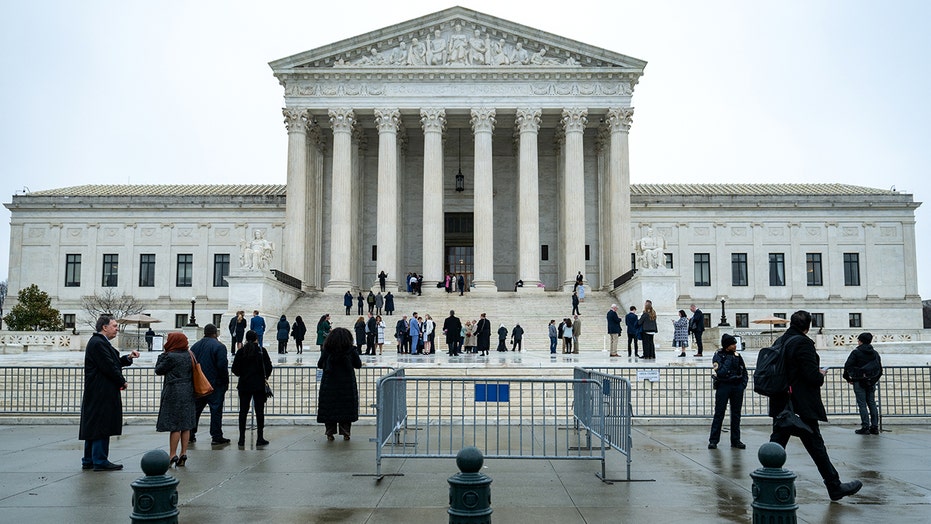
The Supreme Court let Homeland Security screen state voter rolls weeks before the midterms, then let New Hampshire reject student IDs as too close to an election.

photo: Supreme Court blocks use of student IDs as voter identification in New Hampshire (Photo via Fox News)

Nothing in this week's stack is hidden. It is orders, an application, and disclosure forms, every page of it public, and that is the first thing to say.

On Friday, September 25th, the Supreme Court, six to three, lifted a lower court's order that had kept the Department of Homeland Security from using and expanding a database called SAVE — the Systematic Alien Verification for Entitlements — to screen state voter rolls while the case is on appeal. The database was built to check whether noncitizens qualified for government benefits. Common Dreams reports it is known for flagging naturalized citizens, and that eligible voters may have their registrations wrongly canceled weeks before the midterms. Fox News relayed the Associated Press's reading: the immediate impact is likely limited, because existing law blocks most states from systematically purging voters within ninety days of an election.

Hold on to that number.

Then October. All together now — the application on the Tuesday, the order on the Thursday. On Tuesday the 20th, New Hampshire officials filed an emergency petition asking the Court to lift what they called a last-minute block on their law barring student identification cards at the polls, weeks ahead of the midterms; the application came from Secretary of State David Scanlan. On Thursday the 22nd the Court granted it, reversing a federal judge's order and clearing the way for the state to fully ban student IDs for voting during the midterms. Fox News, reporting the decision, wrote that it warned of voter confusion too close to an election. Justice Ketanji Brown Jackson was the lone dissent. In a short dissent, she wrote that she would have left the lower court's decision in place.

So: ninety days before an election is room enough to bring a federal screening program online against the voter rolls of the states. The weeks before that same election are not room enough for a clerk to keep taking a card the clerk was already taking. Same Court, same calendar, two answers.

The word the week turned on was confusion, and it is worth asking where else confusion was lying around, because the rest of the week's paper is also filings. On Monday the 12th, Common Dreams carried the New York Times's tally from Federal Election Commission records: Elon Musk has put at least $276 million into Republican groups and his own super PAC since July alone, and $366 million across the 2025-26 cycle, more than the $290 million he gave in 2023-24. Back on September 22nd, when the number was still reported as a plan to spend at least $100 million, the argument among Democrats was whether to say it out loud.

All together now, down the ledger: two hundred seventy-six million since July, three hundred sixty-six for the cycle, two hundred ninety last time. All of it on file at the Federal Election Commission, which is to say it is paperwork too, paperwork close to an election.

On Saturday the 24th, The Lever traced the Israel lobby routing millions through groups promoting women, reproductive rights, and Latino candidates, and reported that AI interests and other power brokers are adopting the method. On October 6th, Politico reported that AI safety groups are not buying OpenAI's spending retreat; they want stronger commitments to reduce the money AI super PACs are pushing into the midterms. Money with a different name on the envelope is a filing question, and the filings are accepted as filed.

Every one of those dollars arrived in public, on a form, and not one of them had to be read at a polling place by a volunteer with a line waiting behind them. The student will be asked for something else.

Continued on Page F132

Two months after a senator asked Trump to fire Hegseth over "inept management" of the military, Hegseth fired the Pentagon's top military planner.

photo: Hegseth fires top Pentagon strategist accused of leaking classified Iran, Ukraine war information (Photo via Fox News)

You will want to know who may remove whom, and the answer was written down long before September, and it has not shifted an inch since. A general sits at the Secretary's pleasure. The Secretary sits at the President's. A senator sits at nobody's pleasure and may remove no one at all, which is the thing to keep in your hand while you consider what Thom Tillis did on September 2.

He went to the cameras. Republican of North Carolina, a former member of the Senate Armed Services Committee — a man thoroughly acquainted with the instrument he does not hold — and he called on President Trump to fire Secretary of Defense Pete Hegseth over what he called Hegseth's "inept management" of the military. Army Secretary Dan Driscoll had announced his resignation after repeatedly clashing with Hegseth. Tillis made a request. Not a motion, not a vote, not a referral. A request, mind you.

October supplied the demonstration. On October 13 Speaker Mike Johnson nudged the President in public: "I wouldn't be watching." The daughter of a Fort Hood victim said livestreaming "isn't closure for any of us." On October 15 seventy-two former officers wrote that the broadcast "will taint the honor of the military that employs it, and a nation that allows it," and YouGov found 71 percent of respondents opposed "having executions broadcast live to the public," 18 favored it. The same day Trump wrote: "He will die, as scheduled, by firing squad, but this event will not be streamed." Seventy-two officers. Seventy-one percent. You will have noticed what moved, and it was the camera.

On October 22 the Washington Post reported that Hegseth had wanted Eisenhower's thirty-inch wartime globe delivered to his office because he found its historical significance "attractive," that such a move is normally "a deliberate process overseen by trained curators," and that his staff attempted it themselves. The globe broke.

On October 29 Hegseth fired Army Lt. Gen. Brett Sylvia, the Pentagon's top military planner, director for strategy, plans and policy, the J-5, on the Joint Staff — removed, a Pentagon official told CBS News, for apparent misconduct with classified information on the Iran and Russia-Ukraine wars. The New York Post notes Sylvia is the second general ousted from that same chair under this Secretary. The Washington Examiner sets the dismissal beside the President contemplating additional strikes on Iran following next week's elections.

So count the two columns, because nobody at the department will count them for you. Tillis spent a request, on camera, in September, and a request of that kind is spent precisely once ... Sylvia spent the chair that holds the plan for the war now under contemplation. The Secretary is staying.

Nothing here was broken except the globe. The power of removal is plenary — whole, unshared, lodged in one office — and it runs downward only: it attaches to the office above, never to the office beside. The Senate's part is advice, and advice arrives without an instrument. A general who loses the Secretary's confidence loses the chair. A Secretary who loses a senator's confidence loses a morning of coverage.

Strikes on Iran are contemplated for after the elections. The planner is gone. The man who removed the planner is not.

Continued on Page A226

Asked to itemize the Iran war, the Pentagon returned a bill five billion dollars larger; the president says the war ends after the vote, two days out.

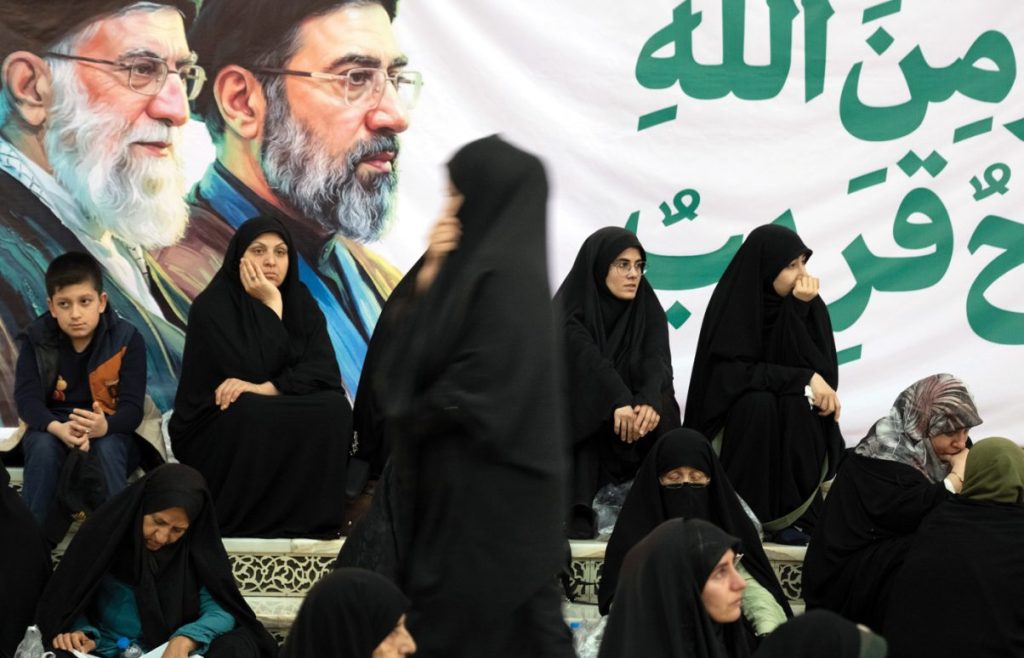
photo: Iranian supreme leader vows ‘unrestricted response’ to any US or Israeli strikes (Photo via Washington Examiner)

The promise that the Iran war ends soon turned thirty-nine days old on Friday. No details have been added to it in that time. That is not a scandal, exactly. It is a reconciliation problem: the promise carries no figures, and the war carries nothing but.

Start with the war's. In July the Congressional Budget Office put the cost at nearly forty billion dollars and called its own number conservative. On August 13 the Pentagon gave Congress a separate figure, just over forty-two billion. This week the Pentagon's figure is forty-seven point one billion. That is a rise of more than five billion dollars in two and a half months, and the department has not said which lines moved.

Senators asked which lines moved. On September 17 every Democrat in the Senate except Senator John Fetterman signed an open letter to Secretary of Defense Pete Hegseth pressing for a cost breakdown of the war; The Hill described the letter as largely symbolic. That same Thursday, Democratic and Republican senators came out of a closed-door briefing with Pentagon policy chief Elbridge Colby saying they had not gotten clear answers on the war or on the National Defense Strategy. In October senators asked again, this time for a full accounting. They are still waiting on the itemization. What came back was the larger total.

The other side of that ledger was filed the same day as the letter. On September 17 the U.N.'s Independent International Fact-Finding Mission on Iran said it had reasonable grounds to conclude the U.S. military committed war crimes in two airstrikes inside Iran. Truthout reported the mission found 123 children killed at Minab, and Minab and Lamerd named as "clearly identifiable" civilian sites. The New York Times reported the strike hit a school, that the mistakes leading to the deaths of more than a hundred children "went beyond negligence," and that a separate strike the same day killed a reported 22 civilians. None of that is a line item either.

The promise itself was born September 22nd on the floor of the United Nations, where the president told the General Assembly he had "a big decision to make": annihilate Iran or strike a deal after November's midterm elections. He had already put it to Axios in September as "Do I want to go in and annihilate them, or do I not?" Tehran had offered terms — President Masoud Pezeshkian said Iran would return to June's ceasefire if Washington did. Late in September Axios reported the president was willing to offer sanctions relief and unfreeze Iran's funds for a look at its nuclear program; that Monday he denied the report on Truth Social. The month closed with no counterparty and no paper.

This week the promise acquired a schedule and still no sum. At a rally in Lubbock on Tuesday the president told the crowd, "You'll see Iran in a couple of weeks, if you don't mind." Wednesday he told Gulf allies when it ends: after the vote. Saturday Secretary of State Marco Rubio said no decision has been made on renewing hostilities. Sunday Iran's supreme leader warned the United States and Israel against new attacks.

When the U.N. ambassador went on cable to account for six-dollar diesel, the account was Ukraine.

The House that could demand the itemization is not sitting; the Speaker sent members home for a seven-week recess ahead of the midterms. So the sequence stands as filed: asked in September, a briefing senators called unclear; asked in October, a bigger number. The promise is thirty-nine days old, the increase is five point one billion dollars, and the war ends after the vote. The vote is in two days.

Continued on Page F132

The Big Ten capped player pay at $49 million under a bill the president sold from a Neyland suite above a stadium selling half-price beer.

photo: El-Sayed campaign wants Stevens to stay away after day of back-and-forth sniping (Photo via Politico)

Hot Mic Moment

Before he boarded for Knoxville he told a reporter, "I want real news, not fake news, like you," and that is the operating manual, Marge. The Pentagon issued rules in October of 2025 making reporters expellable for seeking unapproved information, and the press association's fifty-six outlets handed in their badges, with One America News the only signature on the page. Put me on the political desk. I will call the ballgame from there.

Continued on Page S20
§
§
§

Sal reads the front

“Put the five desks on one page and the page is about counting, and who is allowed to do it. In Anchorage the Department is told to sue the certification, and the complaint names zero ballots, because the ballots were never the point; the suing is. Monday that same Department files a third case over a leak two earlier investigations closed without charges — two looks that found nothing are not an answer, they are two looks. A cap at 100 mph lands on Ukraine's air defense and for ten days the government wore it, until the man who set it said he set it and lifted it that afternoon. Thirty-five percent of Venezuela's oil goes into the Pentagon's own column and the paperwork says gift, and gas is $4.15, which is where the guy at the end of the bar reads the paperwork. The Court lets Homeland Security run the rolls through a database weeks out, then tells New Hampshire a student ID is too close to an election. Too close for the kid. Not too close for the database. A senator asks for a firing and gets nothing; a secretary performs one and the planner is gone. Ask the Pentagon to itemize Iran and the bill comes back five billion larger, and the president says the war ends after the vote. The Big Ten sets forty-nine million as the most a school may pay its players, under a bill the president sold from a suite above a stadium selling half-price beer. Every item is a ceiling on somebody and no ceiling at all above them. The vote is two days off.”
— Sal

FOR SALE Reflecting Pool, painted flag-blue, now algae-green, $14 million. Drains sold separately, repeatedly. — Classifieds

FOR SALE Fiftieth consecutive year of deficit panic, lightly used in Democratic administrations only. Free with any tax cut. — Classifieds

FOR SALE Fourth of July, $5.4 million as observed. Freedom included; terms apply. — Classifieds

Chip reads the front

“Eight items, all of them good, in order. Alaska. The Justice Department stands ready to go to court to protect the count — to block its certification — if the Republican narrowly loses, and the complaint names zero ballots. No ballot in Alaska has been accused of anything. Comey. A third case Monday, two counts, after two earlier FBI investigations closed the same matter without charges; by Friday a judge called the third a possible exercise in futility and the government suggested a fourth. Ukraine. A cap at 100 mph on Starshield terminals arrived without warning, the U.S. government was blamed for ten days, then Mr. Musk acknowledged the order and lifted it the same day, which is ten days of — it is one day. Venezuela. Thirty-five percent of that country's oil now appears in the Pentagon's own column, Washington calls it a gift, and gas is at a record $4.15. The Court. Six to three, Homeland Security may screen state voter rolls using a benefits database known for flagging naturalized citizens, and New Hampshire may refuse student IDs on the ground that the election is too close. Both orders are published. Defense. A senator asked the President to remove the Secretary over inept management; two months on, the Secretary removed the Pentagon's top military planner. The Iran bill. Asked to itemize, the department returned forty-seven point one billion, five billion above August, and has not said which lines moved — has not yet said. Sports. The ceiling is forty-nine million on the players; the beer was half price. Every page of that is public, and the vote is two days out.”
— Chip

The week, from Enoch

Grown now, the kits cross the yard at noon. A man tries the new latch.
Enoch · the Ownership DeskThe Sunday edition · 25 – 31 October 2026

The futures fileevery date somebody set, and what was standing there when it arrived · swept 2026-09-16

3 earlier
4 weeks quiet
2 weeks quiet
2 weeks quiet
2 weeks quiet
+ more
+ more
+ more
today
+ more
+ more
+ more
+ more
+ more
+ more
+ more
+ more
3 weeks quiet
16 further out

The Political Weather

Rain rolls into the ballot box one last time before election morning, where 52 percent of likely voters back the Democratic candidate for the U.S. House against 40 percent for the Republican, a twelve-point lead in a survey that printed the real names on the ballot instead of just the party labels. The same five-day read held the president's approval at 36 percent, 61 disapprove. Bring an umbrella with the candidates' names already printed on it. Back to you, everybody. — Gordy

Tufts Public Opinion Lab/YouGov, Oct 23-27, 1,000 adults (499 likely voters) — 52 percent of likely voters would back the Democratic candidate for the U.S. House, 40 percent the Republican candidate, 3 percent another candidate, 5 percent not sure, among a weighted likely voter n of 499, on a ballot that piped in the actual candidates' names and party labels rather than asking generically; among all 1,000 adults surveyed, 17 percent strongly approve of the president, 19 percent somewhat approve, 10 percent somewhat disapprove, 51 percent strongly disapprove, 3 percent not sure

The temperature is the day’s poll, not ours: the freshest public number on whatever the country was just asked, and it opens its own sources. The season — the president’s approval, averaged and dated — waits behind the temperature until a new wave lands.

The Crossings

The senate card — seven of 14 crossDRGeorgia — D-held. the call: Democratic hold.GANorth Carolina — R-held. the call: Democratic flip.NCNew Hampshire — D-held. the call: Democratic hold.NHMichigan — D-held. the call: Democratic hold.MIOhio (special) — R-held. the call: Democratic flip.OHTexas — R-held. the call: Democratic flip.TXMaine — R-held. the call: Democratic flip.MEAlaska — R-held. the call: Democratic flip.AKMinnesota — D-held. the call: Democratic hold.MNKansas — R-held. the call: Republican hold.KSSouth Carolina — R-held. the call: Republican hold.SCIowa — R-held. the call: Republican hold.IANebraska — R-held. the call: Republican hold.NEMississippi — R-held. the call: Republican hold.MSThe house card — seventeen of 23 crossDRWisconsin 3rd — R-held. the call: Democratic flip.Virginia 2nd — R-held. the call: Democratic flip.New Jersey 7th — R-held. the call: Democratic flip.California 22nd — R-held. the call: Democratic flip.Iowa 3rd — R-held. the call: Democratic flip.Pennsylvania 8th — R-held. the call: Democratic flip.Texas 34th — D-held. the call: Democratic hold.Iowa 1st — R-held. the call: Democratic flip.Pennsylvania 10th — R-held. the call: Democratic flip.Washington 3rd — D-held. the call: Democratic hold.Colorado 8th — R-held. the call: Democratic flip.Florida 25th — D-held. the call: Democratic hold.Pennsylvania 7th — R-held. the call: Democratic flip.Arizona 6th — R-held. the call: Democratic flip.North Carolina 11th — R-held. the call: Democratic flip.North Carolina 1st — D-held. the call: Democratic hold.Ohio 9th — D-held. the call: Democratic hold.Florida 14th — D-held. the call: Democratic hold.Arizona 1st — R-held. the call: Democratic flip.Ohio 7th — R-held. the call: Democratic flip.New York 17th — R-held. the call: Democratic flip.Michigan 10th — R-held. the call: Democratic flip.Michigan 7th — R-held. the call: Democratic flip.

a dot is a race, colored by who holds the seat today; a dot across the dashed seam is a seat changing hands. The full form: the Politics page.

The Sunday edition: the week's top news divided among the desks, one story a desk, the editor in chief's pick on top and the rest under it, every headline one sentence in its writer's voice, every clause in a fold that already ran — on the daily front, with nothing taken off. Free, forever. Continued: the serials · the -m edition · the classic front · contact us.