From§Each

FIRST YEAR SATURDAY, 31 OCTOBER 2026 — THE MORNING EDITION FREE, FOREVER — EVERY CLAIM LINKED

Judge pauses plan to speed children through an asylum system already denying 94 percent of claims

photo: The New York Times

I never have to meet anyone in a parking garage. That is the small mercy of this desk: the material arrives published, paginated and free, and all I do is read it in order.

Today a federal judge paused the administration's plan to fast-track asylum interviews for unaccompanied children. The New York Times put the qualifier in the headline — for now. Lawyers for the children called the plan a deportation assembly line, and I want to be careful with that phrase, because an assembly line is a machine for producing an identical object at speed.

All together now — the June tally from the Executive Office for Immigration Review, which is to say the administration's own immigration courts. …

Continued on Page T30

§78 —

On the caravan

Democrat

Democrat: the needle points at 203, out of 5,200 TROOPS, $210 MILLION, 1,202, 203. 5,200 TROOPS $210 MILLION 1,202 203

The response. On October 29, 2018, the Pentagon announced 5,200 troops for the border in "Operation Faithful Patriot" 1. Its report to Congress put the cost at $210 million: $72 million for about 5,900 active-duty troops through December 15, and $138 million for 2,100 Guard troops 2.

The attention. By Grabien's count, Fox News said "caravan" 1,202 times from October 30 to November 5, the week before the election, and 203 times from November 7 to 13, the week after — a drop of 83 percent; CNN went from 834 to 75, MSNBC from 586 to 110 3. The people themselves were in Tijuana by mid-November, with about 100 asylum claims processed a day and more than 3,000 names on the wait list 4. The emergency ended on Election Day. The caravan was still there.

Sources

  1. 5,200 troops for "Operation Faithful Patriot" — NBC News, 29 October 2018 ↑
  2. $210 million total: $72 million for about 5,900 active-duty troops through 15 December and $138 million for 2,100 Guard troops, per the Pentagon's report to Congress — 10News, November 2018 ↑
  3. Fox News said "caravan" 1,202 times the week before the election and 203 times the week after, an 83 percent drop; CNN 834 to 75; MSNBC 586 to 110 — TheWrap via Yahoo News, citing Grabien, 14 November 2018 ↑
  4. About 100 asylum claims processed a day at San Ysidro; more than 3,000 names on the wait list — CBS News, 16 November 2018 ↑

“My granddaughter asked me what the scariest costume was, and I said, well, in 2018 it was a caravan. October 22nd: "a National Emergy," with the typo. October 29th: "This is an invasion of our Country and our Military is waiting for you!" Fifty-two hundred troops sent the same day. Then I found a count of how often one network said the word: twelve hundred two times the week before the election. Two hundred three the week after. And the people in it were at the border in Tijuana, about a hundred asylum claims a day, three thousand names on a list. Sorry, the kids are at the door. If it was an emergency on November 5th, where was it on the 13th?”— Lou

“Halloween's the right day for this one. October 2018, a week before the midterms: the caravan. "Criminals and unknown Middle Easterners are mixed in." Fifty-two hundred troops, two hundred ten million dollars. Fox said the word twelve hundred and two times the week before the election. The week after: two hundred three. Eighty-three percent of the monster went home the minute the polls closed. It's four days to another midterm. Check the closet.”
Sal
“Coverage of the caravan declined after the election because the caravan had been successfully deterred by the coverage, which is the most cost-effective border security ever devised.”
Chip
The Word today —
Continued on Page W78

Students marching over classroom rats enter weekend three; now showing at American rallies, three days before the vote.

The accurate name for what French schoolchildren are doing died on 20 October, at a rally in Kansas, at the age of roughly seven weeks. It is survived by a third weekend of marches, by an interior minister's warning, and by an American election on Tuesday. It was preceded in death by the arrest count.

It was born in September at a single school in the economically deprived suburbs of Paris: teacher shortages, overcrowded classrooms, dilapidated buildings beset by rats and falling debris. Democracy Now! reported on 6 October that nearly 2,000 high schools had been blockaded or closed.

The renaming began the following week, and renaming is penny-ante work. On 18 October the Washington Examiner reported the president telling France to "close your borders" while police arrested 1,800. On the 20th, from a stage in Kansas, the Guardian reported him attacking "migrants and communists," turning the demonstrations into a cautionary tale for American voters while his party faced midterm losses. France 24 published a fact-check on the 21st: the immigration claims were false. Inside four days the thing had been called rioting and looting, then called somebody else's invasion, and the students got a vote on neither name.

The count went next. Fox News filed one Saturday's arrests at 135, and later in the month at nearly 1,000. The Morning Star reported on 25 October that more than half a million people marched over school funding and the soaring cost of living, that the government put the arrests near a thousand, and that tear gas and water cannon met the Paris march near its endpoint. Of the figures in circulation — 135, nearly 1,000, 1,800 — one of them is the number of people who spent that night in a cell. The footage runs the same either way.

Which brings us to tonight. The New York Post reports a third weekend beginning and Interior Minister Laurent Nuñez warning of a "very high risk" of disorder, especially after dark on Halloween. The schools are still the schools. The rats are still the rats. Three days from now Americans vote, and some of them will have seen all this on a screen behind a podium, under a caption written in Kansas.

In lieu of flowers, ask whoever shows you the footage what the marchers asked for, and check the arrest count twice before Tuesday.
Continued on Page B48

The promise that the Iran war will end "soon" turns thirty-nine days old, no details added

The promise that the Iran war will end "soon" turned thirty-nine days old on Friday, and it has not yet been supplied with a single detail.

It was born September 22nd, on the floor of the United Nations, where the president told the General Assembly he had "a big decision to make": whether to annihilate Iran or strike a deal with it after November's midterm elections. The next day, CBS News asked the Iranian-American activist Masih Alinejad what she made of a head of state weighing the fate of her country against a campaign calendar. The promise did not yet have an age. It only had an audience.

The war had already missed one off-ramp. Days later, Iran offered seven days to reopen the Strait of Hormuz; the offer was declined, and the bombing it might have averted was moved to after the midterms. The president's ambassador to the United Nations told Fox News, that same stretch, that $6.48 diesel was Ukraine's doing. The war stayed on the calendar. The explanation kept moving.

By October 15th the promise had learned a new line. Speaking to reporters, the president said the war "will end very soon," then supplied the only specification it has ever received: "as soon as I want it to end." That is not a date. It is a veto, held in reserve and dressed up as a forecast.

On October 28th, at a rally in Lubbock, Texas, he told the crowd, "You'll see Iran in a couple of weeks, if you don't mind" — campaigning through an economy the wires described only as uncertain, the war carried alongside it, unresolved, into the midterms.

Then Friday came, and Qatar's mediators returned to Tehran to push, again, for a deal that has not arrived. The president met them with the same word he used in September and the word he used in October: soon. No terms were offered. No date was named. None of the wires report the decision itself being announced — only its timing, tucked between one election and the one after it.

A promise renewed on schedule but not once redeemed is not a forecast. It is malarkey with a release date that keeps slipping to the next release date.

In lieu of flowers, ask your senator for the date this war's authorization comes up for a vote, and ask again when the answer is "soon."

Continued on Page B48

Investigative Reporting

THE RESCUE IS A LOAN

Chapter 2: Mode of Living

Take out your wallet and find the card you use most. Not the library card — that one, we've established, has no power over you. The other one. Somewhere behind it, in a building you will never visit, is a file with your name on it, and the file is allowed to say certain things about you and forbidden to say others, and the list of what it may and may not say was written in 1970, inside a law about something else entirely. Now — hold that thought, because the something else is going to wander back into this story wearing a different hat. The law is Public Law 91-508, approved October 26, 1970. Read its long title and you will not find the word "credit" in it. It is "An Act to amend the…

Continued on the Investigative Reporting page

Trump's $8 billion farm rescue arrives at under five times what billionaires already spent steering the election

The war in Iran turned six months old in August with no end in sight, after the administration said it would be quick. In September, a United Nations inquiry found the strikes already carried out were likely war crimes. The Congressional Budget Office filed its own number days later: nearly $40 billion spent, and conservative, its word, not an upper bound. A senator who voted to confirm the defense secretary has since called for his firing twice, and a member of his own party has filed paperwork to impeach him. The president has said publicly the war will not conclude before the election. The farmers paying the diesel prices this war helped drive up did not get a line in any of that.

Then came the fund. On October 7th, an analysis counted $1.7 billion spent by 172 billionaire families on the 2026 midterms, the most ever recorded in a midterm cycle, most of it routed through the super PACs the 2010 Citizens United decision built for exactly this purpose. Two days after that, CBS News ran a farmer's verdict on the fund in its headline: a dime too late and a dollar too short. The same story asked John Boyd Jr., who founded the National Black Farmers Association, to share his thoughts; it did not print those thoughts as the line.

Run the ledger. Eight billion divided by one point seven billion comes to about four hundred seventy percent, call it under five times over. Five times what 172 families spent to steer this election is what the fund came to for the people growing the food the same war taxed. The families' money moved first, filed and counted by October 7th. The fund moved second, after the cost of the war that drove the prices was already logged at nearly $40 billion and called conservative.

The dime-too-late farmer and the 172 billionaire families are reading the same federal budget, hon. One of them wrote it.

Continued on Page F131

Zelensky named Hegseth for the month's delay; the sale came four days later, $500 million smaller than September's.

Start with the filing, because the filing is the easy part. On Friday the State Department approved a possible sale of 500 Patriot interceptor missiles to Ukraine, valued at $2.1 billion. The Hill, describing the sale, reports it is funded entirely by U.S. partners and allies. That is the table. Now the ledger it is supposed to reconcile with.

On October 15 the New York Post reported that Ukraine had depleted its stash of interceptors for the Patriot system while Russian ballistic missiles kept landing. Not running low. Out.

Five days later, on October 20, Russia sent another wave. At least seven dead by officials' count, four of them in the Kyiv region, 27 wounded there, children among them. Ukrenergo reported power outages in twelve regions. Zelensky said that day that Ukraine had nearly run out of Patriot interceptors and that the Pentagon was delaying the delivery of missiles other countries wanted to send. Of a separate Sunday evening attack, he said Washington gave Kyiv no warning it was coming, and called the American position a denial of reality.

On Monday, October 26, he stopped describing the delay and started naming the desk it sat on. "We have been waiting for nearly a month for Mr. Hegseth to sign off on missiles for Patriots and NASAMS." Nearly a month, by the customer's count. Four days later, on Friday, the approval came through.

Here is the entry for the gap column. In September the figure attached to a Patriot sale for Ukraine was five hundred million dollars higher than the figure approved Friday. What the September number covered line by line is not something I have paperwork for, and I am not going to convert a gap I cannot itemize into interceptors; that is how people end up believing their own arithmetic. What I can do is set the two numbers side by side and note the direction each one moved. The need rose: out on the 15th, twelve regions dark on the 20th, nearly a month of waiting by the 26th. The price went the other way.

Note also what Friday's document is and is not. It is an approval of a sale. It is not a delivery, and per The Hill the partners and allies are the ones paying. So the item that took nearly a month, on the customer's clock, was a signature on somebody else's purchase order.

A thirty-day pause costs the signing side nothing. It never appears on their statement. It appears on the other statement, in counts: waves, regions without power, dead. Reconcile those two columns however you like, hon. They do not balance.

Continued on Page F131

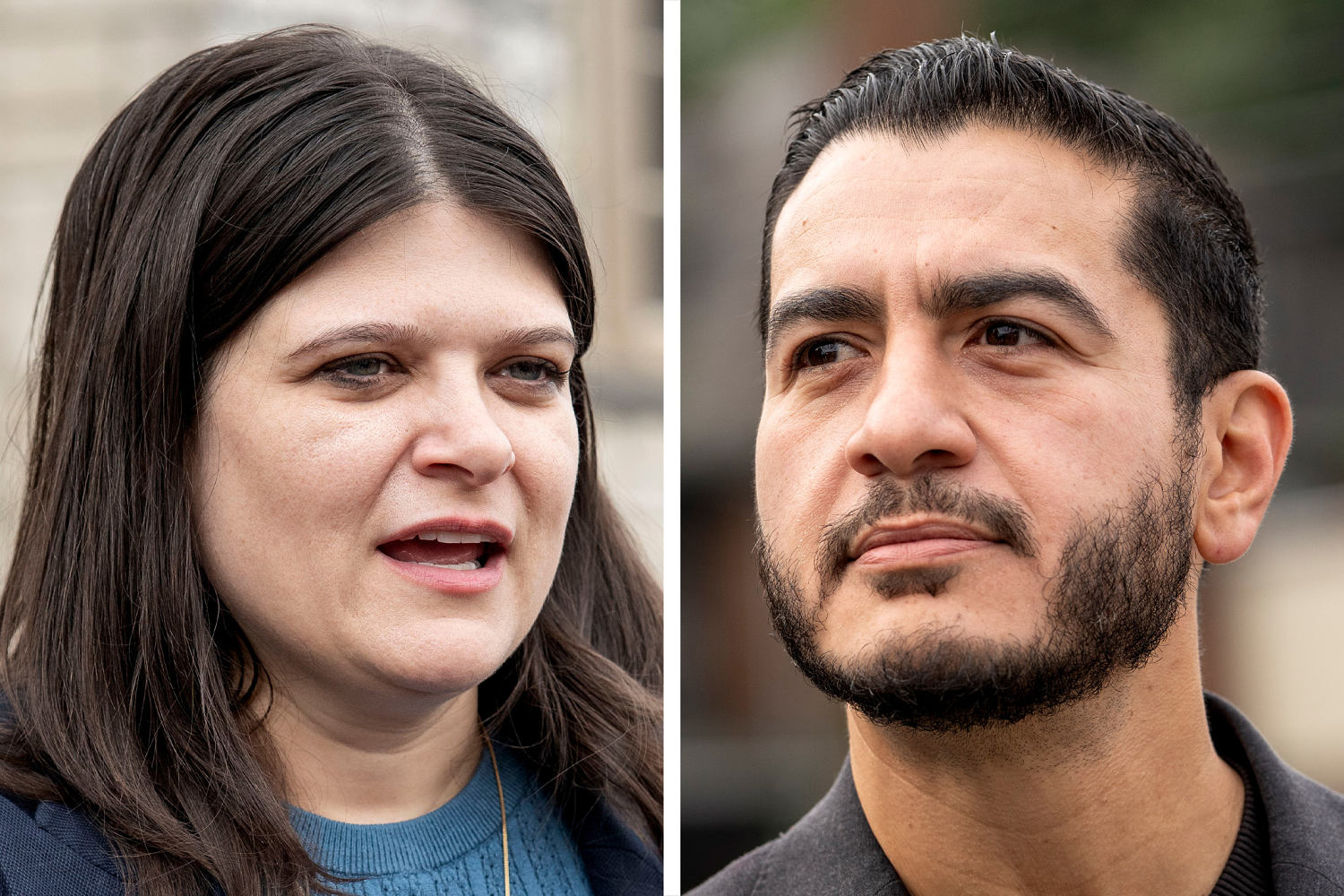
The Michigan Democrat AIPAC, Cruz and RFK Jr. spent October attacking is the one asked to apologize

photo: NBC News

LOU: Forgive me, I'm in the wrong building again. I went down to the health window, the one with the pamphlets by the door, because I had a question about something a health secretary wrote, and the gentleman there said sir, this is immunizations. I said that's exactly what I thought it was. He sent me upstairs to the people who take complaints about advertisements, and the woman up there said the ads aren't hers, she only takes forms, and the forms for this kind of thing are federal, and the federal ones are across town, and by then it was raining and my car needs a fan belt and I had four rooms' worth of notes and no room that wanted them. So let me just read you what the wrong rooms told me. I wrote it all down. Just a second. Ah — here it is.

The campaign-finance people gave me this one. A report filed the tenth of October: AIPAC's super PAC, the United Democracy Project, resumed spending in the Michigan Senate race, $95,000 on mailers opposing the Democratic nominee, Dr. El-Sayed, to help the Republican, Mike Rogers. The report came a day after Rogers and El-Sayed had gone at each other on a debate stage about healthcare and drug prices. So the mailer has a payer, and the payer has a date. Does a voter who opens one of those mailers see that date on it, or does the voter have to find the window I couldn't find?

Here's the page I keep going back to, and I apologize, because I had it out twice already in the elevator. The twentieth of October, the Guardian. The man who tried to ambush the nominee with a question about his supposed allegiance to the Muslim Brotherhood — the clip the campaign then turned around and ran with — is the son of a political operator whose firm was recently paid $250,000 by a group called America Next, for canvassing and influencer marketing. The paper says the group has been trying to gin up opposition it calls organic. Organic. That's their word, off their own paperwork, I didn't bring it with me.

Which is a word I know from the yard. I've got a tomato plant coming up out of the gravel by the downspout, where the dog sleeps. Nobody planted it. The ones in the bed along the fence, I planted those, and the slip from the nursery is in my glovebox with the registration, because my wife makes me keep slips. Now if a fella leans over the fence and asks which plants are which, I don't have to argue with him. I go to the glovebox. The difference between the volunteer and the planted one is a piece of paper with a dollar amount and a date on it, and either the paper exists or it doesn't. So: in this story, does the paper exist? And how much is on it?

Then the twenty-eighth. Senator Cruz of Texas said that Americans could die if El-Sayed wins next week, and talked about who might end up on the Intelligence Committee. People called that incitement. I've only got the date and the sentence.

And then today. The health secretary posts more than 3,700 words denouncing radical Islam and calling on the nominee to condemn the Muslim Brotherhood, after outlets and the campaign had rebuked him. The same Friday, Representative Stevens demands the nominee condemn an outside group's ad about aid to Israel and apologize for his comments. He says she's intent on relitigating their primary. His campaign asks her to stay away from the rally the two of them were supposed to hold together. Other Democrats say the blowup is imperiling the seat. Three days.

Oh — excuse me, one more, before you get in the elevator. Of everybody in this notebook — the super PAC, the senator, the secretary, the adviser whose firm took the $250,000 — which one has been asked this week for an apology? And which one did the paperwork call organic?

Continued on Page A226

THE CONDITION

Justice Department sues to block Alaska's certification, surges agents, then says it is not assuming a crime occurred

There is a crime in this somewhere, you would think, and the United States Attorney in Anchorage will not name it. Michael Heyman confirmed a criminal investigation and a civil one on Friday, and said he is "not making any assumptions on whether a crime has been committed or not." Hold that order. The suit asking a court to withhold certification of Alaska's Senate race was filed a week ago; the relief it asks for arrives only if Dan Sullivan loses. The ballots it challenged numbered zero. The grounds have been arriving since, in instalments: law enforcement surged, and a Friday filing asking that every ballot ranking Daniel J. Sullivan be segregated for voter confusion. Segregated, not counted. And how does setting a ballot aside establish that the voter who marked it was confused? The filing does not say. A condition precedent is the event a promise waits upon; until it occurs, nothing is owed. Here the event is not a finding ... it is a Republican defeat. The New York Times reported on Wednesday that Peltola's campaign recruited the second Sullivan; she denies knowing of "any other candidate" besides herself and the incumbent. On 27 August, two months before her campaign recruited anyone, a Washington Examiner column called the decoy Sullivan Democratic voter suppression. Alaska votes Tuesday.

Continued on Page B48

THE INJUNCTIONS

Fourth court order this month tells Justice Department to stop threatening the people counting the votes.

I had the wrong building, then the wrong floor, and I'd like to get that out of the way first, because everything I'm about to read you came to me sideways.

Friday morning I went downtown with one question. The woman at the first counter could not have been nicer about it: wrong floor. The second counter said wrong agency, try the clerk. The clerk said they don't keep anything that comes out of Washington, that'd be the court. The court said look it up, it's public. So I stood on the steps in the rain in the one raincoat I own, which is also the raincoat I own in August, reading the pages I'd folded into the pocket. Four rooms, each one pointing at the next. I'm told that's normal.

The pages are out of order. Hold on. Here.

October 17th, the Guardian prints a letter from senior Justice Department officials to election officials in California. Local officials who process and tabulate ballots submitted by suspected noncitizen voters, it says, are putting themselves at risk of criminal investigation and potential prosecution. The department's phrase for the offense is "knowingly tabulate." I circled it out there on the steps, because I couldn't work out who, in a room holding ten thousand envelopes, is the one who knows.

Five days later, October 22nd, a federal judge in California finds Homeland Security violated the Voting Rights Act, sending agents door to door asking people their immigration status and whether they had voted. Then the subpoenas: three employees of the Los Angeles County Registrar-Recorder's office ordered into federal court on November 4th, which is the day after the election. Then October 26th, a $1 million reward announced for reporting voter fraud, past or upcoming. It is still sitting there. A million dollars offered for the thing, and the thing hasn't come in.

I want to show you a small thing. The fellow who runs the store on my corner took a run of bad twenties this summer. He taped a card by the register: fifty dollars to anybody who tells him who's passing them. Nobody has come in for the fifty. So last week he told the kid at the register that any bill that looks off goes in the second drawer, don't ring it, and if the kid takes a bad one it comes out of the kid's pay. I asked how the kid is supposed to tell. He said that's what the drawer is for. Tuesday the line was out the door, the dog and I were in it, and the kid rang everything. Was the kid passing bad money, or was the kid standing there?

Friday evening, Judge Trina Thompson, on a suit brought by unions representing California election workers, issues a temporary restraining order: the Justice Department is barred from threatening or coercing election workers to stop processing ballots, and barred from demanding that officials segregate or decline to count ballots the federal government deems may have been cast by ineligible voters. The order runs through November 16th.

That is four federal court orders in nineteen days against this administration's handling of Tuesday's election: October 12th, a New York judge halting taxpayer-funded television ads promoting the president and ordering the rest of a $20 million purchase cancelled; the 22nd, the Voting Rights Act ruling; the 28th, another judge freezing that same $20 million; Friday, the restraining order. And a report published the 27th found 53 of the 60 battleground House and Senate races sit in districts or states with at least one Trump-appointed judge on the bench.

Excuse me — you've got your hand on the door, this takes a second. The counting is Tuesday the 3rd. The three subpoenaed workers are in court Wednesday the 4th. The protection ends the 16th, and the letter is still the letter. So when a clerk picks up an envelope the government hasn't deemed anything about yet, and won't until afterward — I'm sorry to keep coming back to this, it's been in my teeth since the steps — which word in that letter is the one they'd be charged under, the department's own, knowingly?

Continued on Page B48
§
§
§
“The front page is a ledger with better fonts. Somebody paid, somebody collected, and the flag's up there so you don't ask which one you were.”
— Sal

FOR SALE Eight straight failed Pentagon audits, one careful owner. Payment plan: another budget increase. — Classifieds

FOR SALE Reflecting Pool, painted flag-blue, now algae-green, $14 million. Drains sold separately, repeatedly. — Classifieds

FOR SALE Fiftieth consecutive year of deficit panic, lightly used in Democratic administrations only. Free with any tax cut. — Classifieds

“A strong edition for people who enjoy being upset. The economy is historic, the deportations are orderly, and the lakes have never been better named. I'm told every story on this page is real, which — frankly, that's the part I'd have fact-checked.”
— Chip
By spring the dog sleeps in the shed. A man finds fewer hens at dusk.
Enoch · the Ownership Desk

The futures fileevery date somebody set, and what was standing there when it arrived · swept 2026-09-16

3 earlier
4 weeks quiet
2 weeks quiet
2 weeks quiet
2 weeks quiet
+ more
+ more
+ more
today
+ more
+ more
+ more
+ more
+ more
+ more
+ more
+ more
+ more
3 weeks quiet
17 further out

The Political Weather

Rain rolls into the ballot box one last time before election morning, where 52 percent of likely voters back the Democratic candidate for the U.S. House against 40 percent for the Republican, a twelve-point lead in a survey that printed the real names on the ballot instead of just the party labels. The same five-day read held the president's approval at 36 percent, 61 disapprove. Bring an umbrella with the candidates' names already printed on it. Back to you, everybody. — Gordy

Tufts Public Opinion Lab/YouGov, Oct 23-27, 1,000 adults (499 likely voters) — 52 percent of likely voters would back the Democratic candidate for the U.S. House, 40 percent the Republican candidate, 3 percent another candidate, 5 percent not sure, among a weighted likely voter n of 499, on a ballot that piped in the actual candidates' names and party labels rather than asking generically; among all 1,000 adults surveyed, 17 percent strongly approve of the president, 19 percent somewhat approve, 10 percent somewhat disapprove, 51 percent strongly disapprove, 3 percent not sure

The temperature is the day’s poll, not ours: the freshest public number on whatever the country was just asked, and it opens its own sources. The season — the president’s approval, averaged and dated — waits behind the temperature until a new wave lands.

The Crossings

The senate card — seven of 14 crossDRGeorgia — D-held. the call: Democratic hold.GANorth Carolina — R-held. the call: Democratic flip.NCNew Hampshire — D-held. the call: Democratic hold.NHMichigan — D-held. the call: Democratic hold.MIOhio (special) — R-held. the call: Democratic flip.OHTexas — R-held. the call: Democratic flip.TXMaine — R-held. the call: Democratic flip.MEAlaska — R-held. the call: Democratic flip.AKMinnesota — D-held. the call: Democratic hold.MNKansas — R-held. the call: Republican hold.KSSouth Carolina — R-held. the call: Republican hold.SCIowa — R-held. the call: Republican hold.IANebraska — R-held. the call: Republican hold.NEMississippi — R-held. the call: Republican hold.MSThe house card — seventeen of 23 crossDRWisconsin 3rd — R-held. the call: Democratic flip.Virginia 2nd — R-held. the call: Democratic flip.New Jersey 7th — R-held. the call: Democratic flip.California 22nd — R-held. the call: Democratic flip.Iowa 3rd — R-held. the call: Democratic flip.Pennsylvania 8th — R-held. the call: Democratic flip.Texas 34th — D-held. the call: Democratic hold.Iowa 1st — R-held. the call: Democratic flip.Pennsylvania 10th — R-held. the call: Democratic flip.Washington 3rd — D-held. the call: Democratic hold.Colorado 8th — R-held. the call: Democratic flip.Florida 25th — D-held. the call: Democratic hold.Pennsylvania 7th — R-held. the call: Democratic flip.Arizona 6th — R-held. the call: Democratic flip.North Carolina 11th — R-held. the call: Democratic flip.North Carolina 1st — D-held. the call: Democratic hold.Ohio 9th — D-held. the call: Democratic hold.Florida 14th — D-held. the call: Democratic hold.Arizona 1st — R-held. the call: Democratic flip.Ohio 7th — R-held. the call: Democratic flip.New York 17th — R-held. the call: Democratic flip.Michigan 10th — R-held. the call: Democratic flip.Michigan 7th — R-held. the call: Democratic flip.

a dot is a race, colored by who holds the seat today; a dot across the dashed seam is a seat changing hands. The full form: the Politics page.

From each according to his ability, to each according to his needs. Our ability is the link under every claim; your need is to check it. Free, forever. Continued: the serials · the -m edition · the classic front · contact us.